Camunda Blog



28 oct. 2022
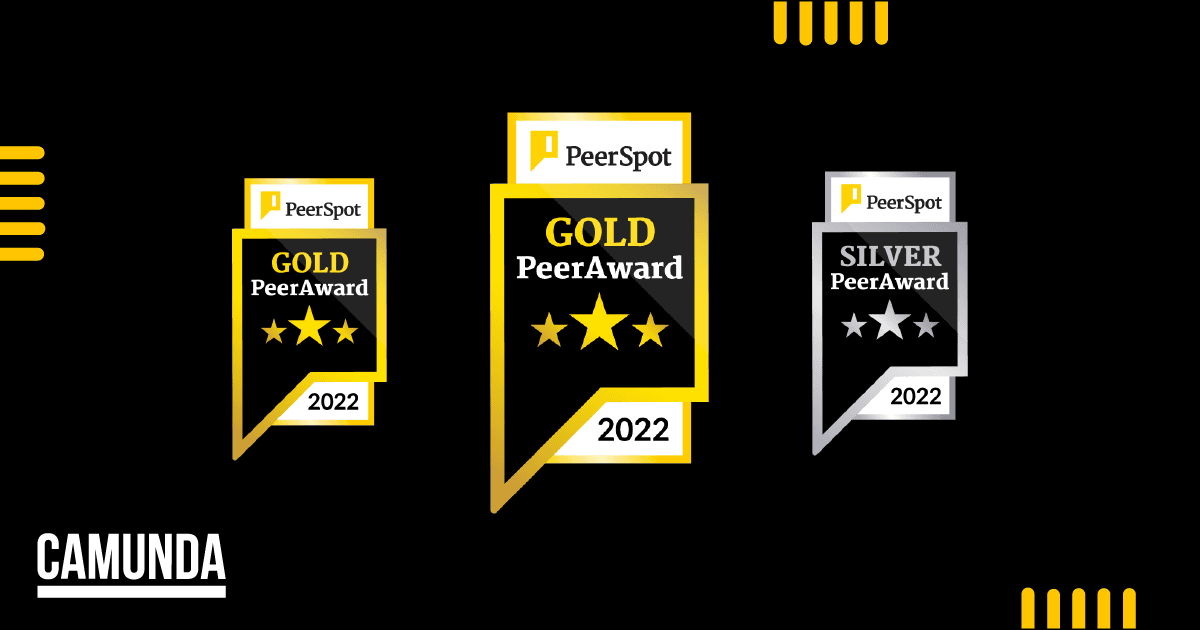
Camunda Wins Three PeerSpot 2022 Peer Awards
We’re grateful to our customers and community for selecting Camunda Platform for three 2022 PeerSpot Peer Awards.
By Danny Shain
26 oct. 2022
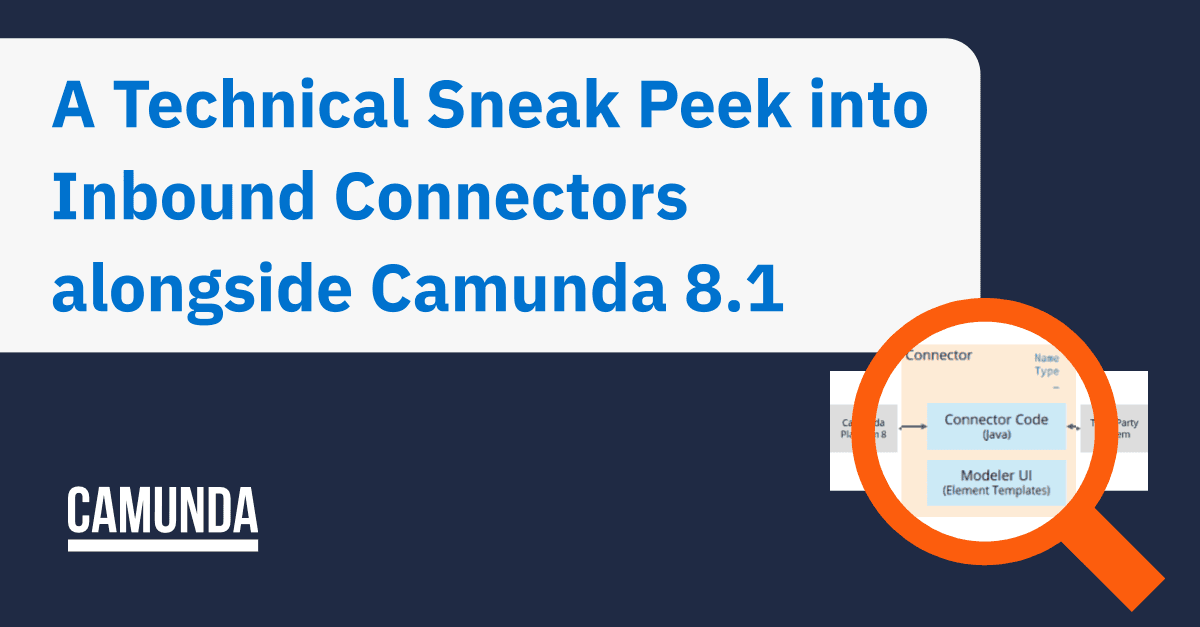
A technical sneak peek into inbound Connectors alongside Camunda 8.1
Learn how inbound Connectors work in Camunda Platform 8.1, and how you can get started with them today.
18 oct. 2022
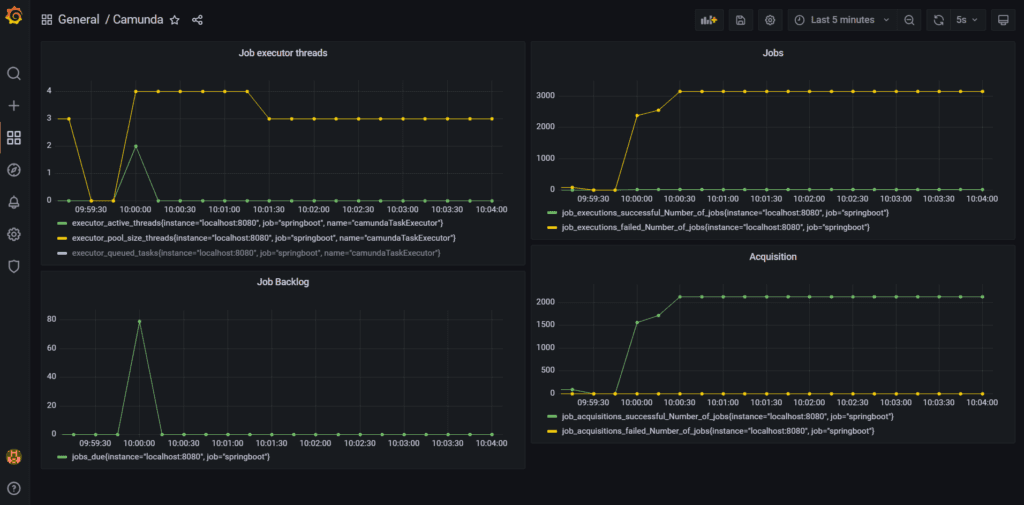
Monitoring Camunda Platform 7 with Prometheus
Monitoring is an essential facet of running applications in a production system. Through this process, organizations collect and analyze data, and determine if a program is performing as expected within set boundaries. When combined with alerting, monitoring allows for detecting unexpected system behavior to mitigate exceptional situations as fast as possible. Furthermore, tracking the performance of a system enables organizations to improve those aspects that have the biggest impact with higher priority. One essential aspect of monitoring is the list of key metrics you want to observe. There are different categories of statistics that can be of interest here. To observe the defined metrics, there are plenty of application monitoring tools on the market today. They differ in many aspects…

CamundaCon 2022: Q&A with Bernd and Daniel
Learn from Bernd Ruecker, Camunda Co-founder/Chief Technologist, and Daniel Meyer, Camunda CTO, as they tackle questions on connectors, modeling & more.
12 oct. 2022
Securing Camunda 8 self-managed cluster and applications behind a directory
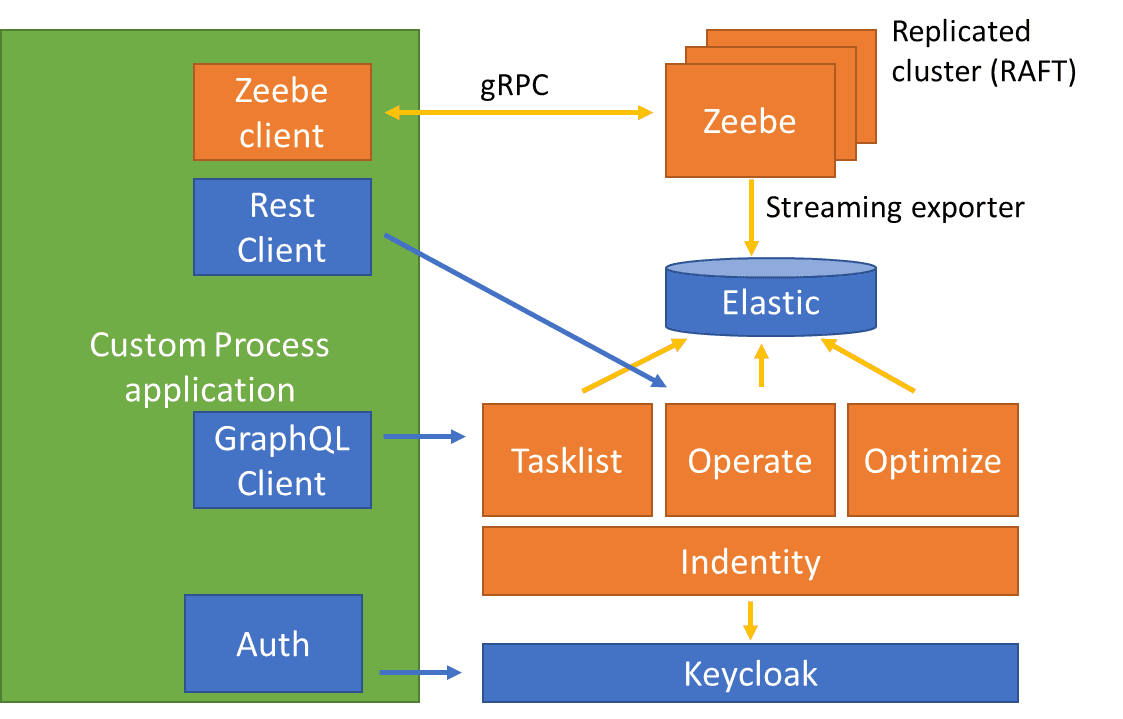
Directory services are an effective way to manage an organization’s users, groups, printers, devices, and more. Most organizations accomplish this using Active Directory, Apache Directory, Oracle Internet Directory, or other similar tools. Recently I worked with a customer who wanted to see how he could secure the Camunda 8 Platform and process applications with such a directory. Their requirements consisted of: In this article, I’ll briefly explain the 3 easy steps taken to fulfill their requirements which include: If you’re interested in seeing a fuller picture, you can find a project with a complete documentation on github. Before we start, I’d like to reintroduce some general concepts about Camunda 8 and Keycloak. Camunda 8 and Keycloak overview Camunda 8 is…
11 oct. 2022
Camunda Platform 8.1 Released – What’s New
Updates to Web Modeler, Connectors, Zeebe, Operate, Optimize, & more.
11 oct. 2022
Camunda Platform 7.18 Released – What’s New
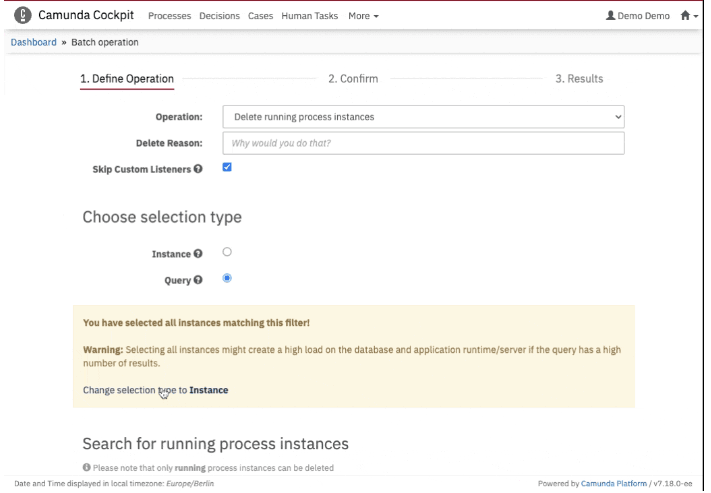
We’re extremely excited to announce the release of Camunda Platform 7.18 Here are some of the highlights: Cockpit: Improved instance selection to avoid unintended batch operations Cockpit: Easier navigation of high batch operation volumes MDC logging features Camunda Forms in Tasklist: Populate select options via process data Exception error codes Filter and order tasks by last updated WebSphere Liberty New and retired supported environments You can download Camunda Platform or run it with Docker. For a complete list of the changes, please check out the release notes. For patched security vulnerabilities, see our security notices. If you want to dig deeper, check out the source code on GitHub. Cockpit: Improved instance selection to avoid unintended batch operations Previously, when performing…

11 oct. 2022
Accelerate Connectivity with Camunda Platform 8.1
Eliminate islands of automation by orchestrating processes from end to end.
By Shane Ernest

30 sept. 2022
Using FEEL with Camunda 8
What is FEEL As a part of the Decision Model and Notation (DMN) specification, the OMG also defined the Friendly Enough Expression Language (FEEL). Since DMN is intended to be used by designers and business analysts who would like to build decision tables, FEEL needed to be designed as an uncomplicated and human-readable expression language that would help readers understand the logic being described or executed by the DMN table. Expression languages are typically used by developers to evaluate data to produce a result based on query parameters or conditions. This means it’s syntactically closer to code than human-readable sentences. Since one of the goals of FEEL is to be “process analyst friendly,” it prioritizes readability more than other expression…
By Niall Deehan