Category

Process Orchestration

All Camunda blog posts tagged with Process Orchestration.

Strengthening Customer Relationships with Process Automation

Nestled in Switzerland on the northern shore of glacial Lake Lugano, the picturesque city of Lugano is one of the most forward-thinking and digitized local government agencies in Europe. With its always-available web portal, more than 67,000 residents can interact directly with the local government – Città di Lugano.  Città di Lugano believes everybody, whether they are residents, visitors or businesses, should be able to trigger and actively participate in processes — from obtaining a construction permit, organizing an event in a public space or obtaining financial support for a cultural initiative.  Simple, straightforward access  Città di Lugano enables access to digital services through the portal, powered by Camunda Platform, that gives participants full visibility into the progress of their…

By Charley Mann

Beyond RPA: How to Build Toward End-to-end Process Automation

Robotic Process Automation has come of age, with Forrester Research predicting the RPA market revenue is on target to reach $2.9 billion this year. It’s not hard to see why this market is maturing fast, with RPA promising an easy and quick fix to automate many of the manual, repetitive tasks that require manual data input or an exchange of data with an inflexible legacy system. RPA bots can be deployed quickly and deliver an immediate productivity boost, not to mention significant cost savings. But with so many tools available on the market — you can find everything from vendors promoting low-code solutions to code-heavy approaches, all marketed under the RPA banner —  it’s becoming imperative to differentiate RPA from…

By Charley Mann

Is there an alternative to spaghetti?

When it comes to food, definitely not. Spaghetti Bolognese needs few ingredients, is quickly prepared and always tastes great – at least to me 😉 But what I am actually getting at? Spaghetti Code. In contrast to a meal, Spaghetti Code is not eaten up in a few minutes. It stays, is extended, changes, grows and grows and grows. It is the same with microservices. If you start with microservices, you always have to consider how fine-grained services are cut. In the end, the spaghetti effect shifts from code to orchestrating components. This component must know all the small services and connect them with each other. The same can be found in manual activities that have not been automated or…

By Adam Urban

Announcing Zeebe and Operate 0.26

A new release for Zeebe and Operate 0.26 is available now. You can grab the releases via the usual channels: Docker Hub GitHub Maven Central As usual, if you’d like to get started immediately, you can find information about it directly on the Zeebe & Operate documentation website. It is possible to perform a rolling upgrade to Zeebe 0.26 from 0.25. For Camunda Cloud users, 0.26 is the new production version since this week, your existing clusters were already upgraded automatically. Here are some highlights: Zeebe Topology Response with Partition Health Use Memory Mapped Storage Level by Default Operate Improved User Status Feedback Infinite Scroll in Instances View Configurable Context Path Zeebe Modeler Improved UI for Input/Output Mappings Support Propagate…

By Camunda Cloud Team

Modernizing RPA Deployment with an Eye Toward the Future

Your organization is only as successful as its processes. But if your business is, like many, using a patchwork of off-the-shelf and proprietary software and platforms — your core business processes aren’t running in true end-to-end fashion; instead, they’re executed in silos.  The Robotic Process Automation (RPA) bots you deployed to replace repetitive human tasks? If you’re like 9 out of 10 process automation experts we surveyed, those bots may still provide value, but will likely turn cumbersome and complex as your business needs and processes evolve. And if you’ve tried to scale RPA deployments or implement more complex RPA script orchestrations, you’ve discovered how brittle and high-maintenance your RPAs have become.  The end result of this situation is that…

By Amy Hooker Kidd

Hello Process Automation, Good Bye 2020

Like many, at Camunda we’re looking forward to getting 2020 behind us. Yet with all its challenges and unexpected twists and turns, we were fortunate to also experience many bright spots throughout the year.  The pandemic forced us, along with our user community, customers and partners to revisit well-laid plans and work around inevitable disruptions. Yet, as organizations large and small navigated the challenges associated with remote work and newly distributed teams, the need for the “digital enterprise” and fully automated processes became more apparent than ever. Our process automation platform proved to be fast to implement and scale in a time of need and helped many organizations around the world to adapt to new circumstances.  As a result, we…

By Gottfried Sehringer

Is Automation the Key to Modernization?

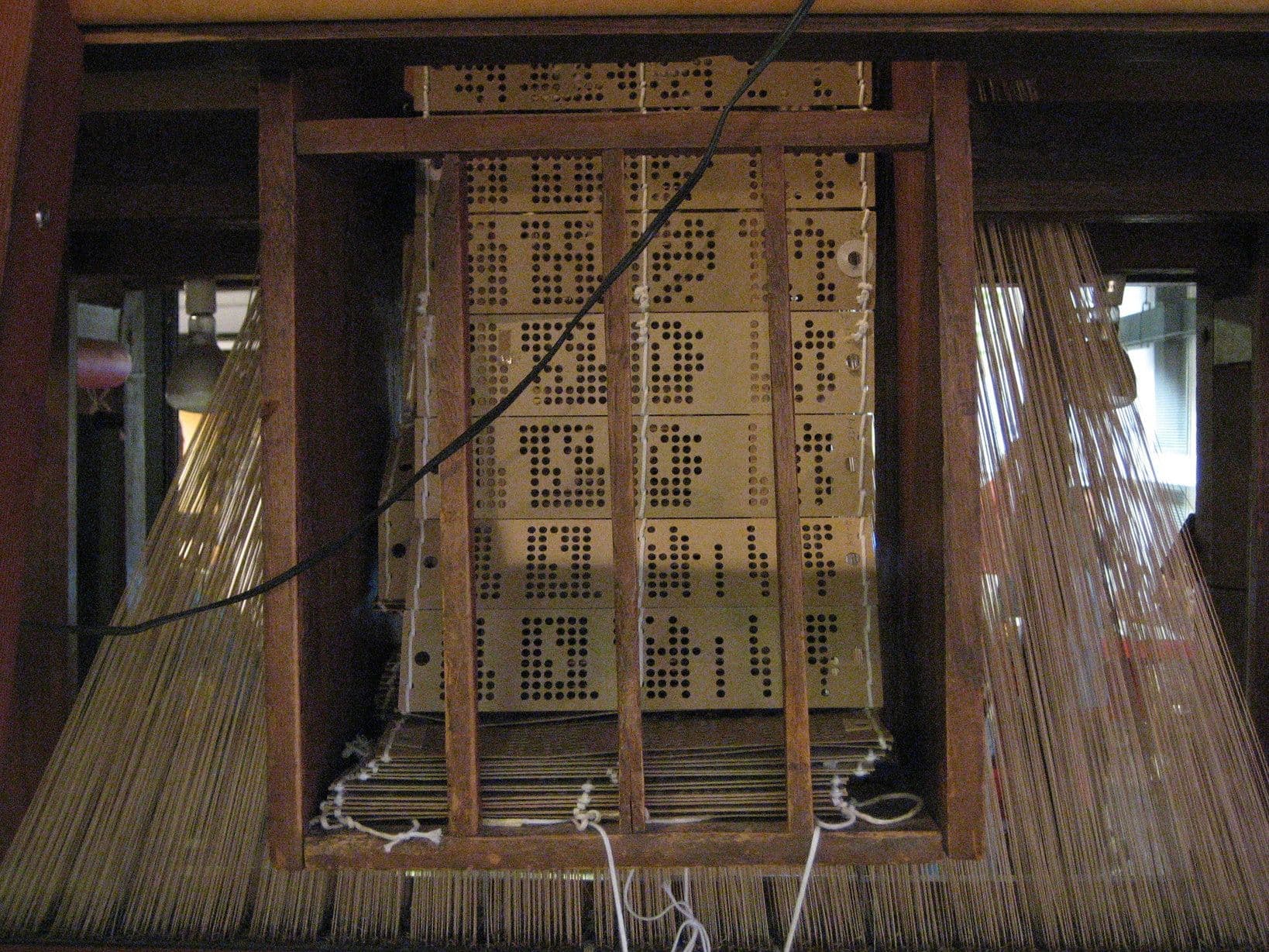
Automation and modernization have been tightly linked for centuries. The Jacquard loom brought automation to weaving in the 18th century, transforming a craft into a modern factory enterprise. Similarly, early digital computers brought automation to banking and other industries, heralding the transformative modernization that characterized the mid-20th century. Today’s automation technologies represent the pinnacle of such technological process. From digital process automation to artificial intelligence, from enterprise content management to robotic process automation, today’s enterprise IT leaders have a plethora of automation technologies to choose from. You would think, then, that leveraging such technologies to modernize the enterprise would be a straightforward affair. Replace the hand weavers with automated looms or replace human ‘computers’ with mechanical ones and you’re done,…

By Jason Bloomberg

Retaining Community Knowledge on the Slack Free Tier with a Slack bot

“There is a lot of valuable information in this Slack, but whenever I come back to find it, it’s gone because of the 10,000 message limit. Can we move this community to Discord, which has persistent message history?” That message, from a community member in the Zeebe Slack, triggered a DevRel project that resulted in the Slack Archivist – a Slack bot that allows valuable conversations to be archived from the community Slack to a dedicated searchable topic in our Discourse-powered Forum. The Problem Slack is ubiquitous. You probably have it open right now, and are in several different Slack teams. We use Slack internally at Camunda, on a paid plan, and when it came time to stand something up…

By Josh Wulf

Refactoring an Actor Model System from Nact.io to Camunda Cloud

This month marks the 20th anniversary of the Open Source Erlang language and the Erlang virtual machine. Renowned for its reliability, the ability to hot-patch running code, and the Actor model, Erlang has been incredibly influential in software development, particularly in scalable distributed systems. If you look through the Zeebe source code, you’ll see Actor components sprinkled throughout. Zeebe core engineer Deepthi Akkoorath did her PhD thesis in Scalable Consistency in theMulti-core Era and is a huge fan of Erlang. Here is a video of Deepthi describing the architecture of Zeebe, the workflow engine powering Camunda Cloud: https://www.youtube.com/watch?v=JbXKgQQmukE A couple of months ago, I wrote a statistics collector for the Camunda DevRel team. You can see the project in the…

By Josh Wulf

Try All Features of Camunda