Category

Getting Started

All Camunda blog posts tagged with Getting Started.

Apr 14, 2020

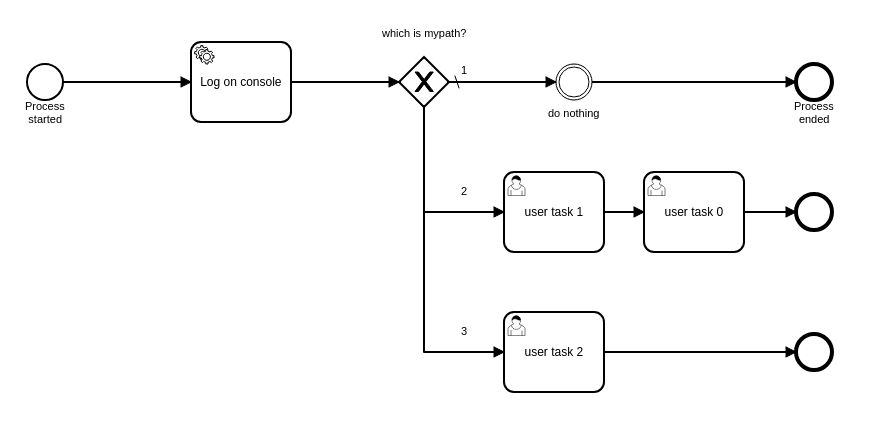
Process Migration Using BPMN Part 1

Please note: This blog post is the Part One of a two part series. If you are looking for Part Two then you can find it here. If your organization relies on BPM and your process definitions are considered to have “long running” process instances (perhaps due to user tasks etc.), then there comes a time when your organization needs to define the process instance migration strategy. This blog will show you how to define your migration strategy as a business process and to use BPMN to help control different scenarios during your custom migration.

By Chris Allen
Mar 17, 2020

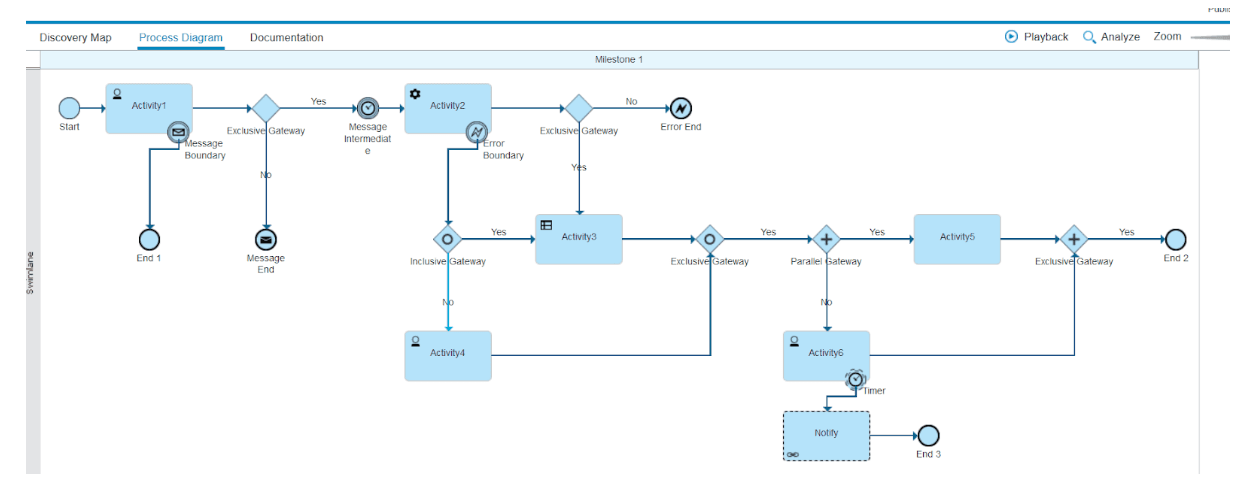
Migrating processes from other vendors to Camunda

Many vendors support the BPMN standard, but others do not. And even those vendors who support the BPMN standard will omit or extend aspects of it, which can create challenges when you attempt to migrate processes to Camunda. However, there’s a set of tools available to help you migrate processes developed in other vendor platforms.

By Joe Pappas

The Microservices Workflow Automation Cheat Sheet – Who owns your process model?

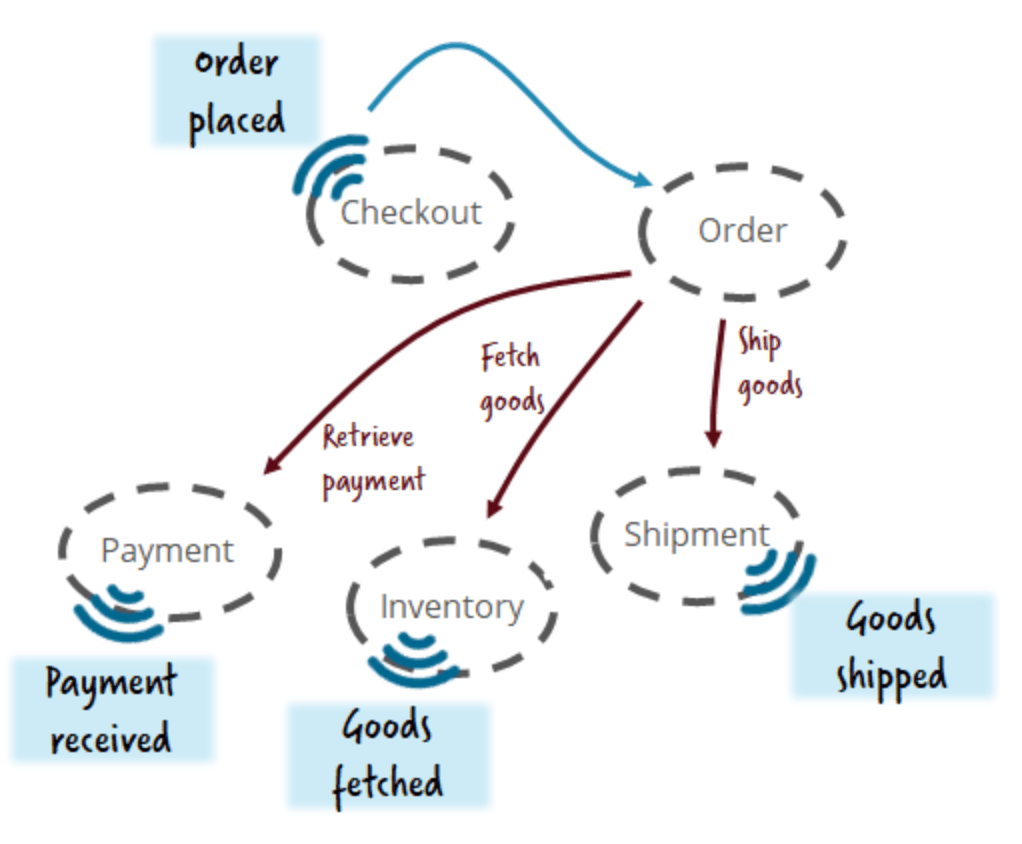
We recently shared 3 Common Pitfalls in Microservice Integration – and how to avoid them and lots of you wanted more. So this four-part blog series takes us one step back to the things you’ll be considering before migrating to a microservices architecture and applying workflow automation. In this fourth and final post in the series, we’ll discuss why the physical ownership of process models is so important to ongoing success.

By Bernd Ruecker

The Microservices Workflow Automation Cheat Sheet – to Centralize or Decentralize?

We recently shared 3 Common Pitfalls in Microservice Integration – and how to avoid them and lots of you wanted more. So this four-part blog series takes us one step back to the things you’ll be considering before migrating to a microservices architecture and applying workflow automation. In this third post in the series, we’ll dive deeper into architecture and discuss whether it’s better to run a workflow engine centralized or decentralized.

By Bernd Ruecker

The Microservices Workflow Automation Cheat Sheet: The Role of the Workflow Engine

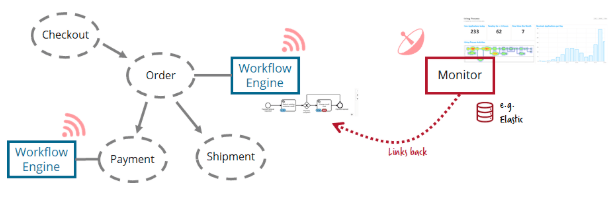
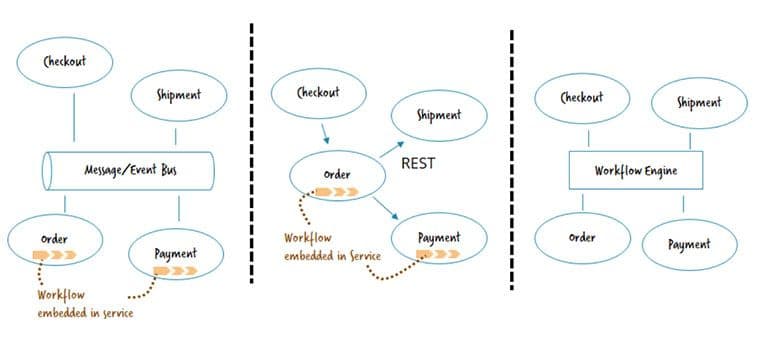
We recently shared 3 Common Pitfalls in Microservice Integration – and how to avoid them and lots of you wanted more. So let’s take one step back to the things you’ll be considering before migrating to a microservices architecture and applying workflow automation. In this second of our four-blog series, we’ll look at all things architecture – starting with three basic architecture alternatives to set up your microservices landscape.

By Bernd Ruecker

Getting Started with Zeebe on Kubernetes with Spring Boot

In this tutorial you will learn how to get a simple process definition running into a Zeebe Cluster which runs inside Kubernetes. The tutorial covers: How to install Zeebe in your Kubernetes Cluster using the official Zeebe Helm Charts How to model a process definition with Zeebe Modeler How to interact with the Zeebe Cluster once it is running with zbctl (deploy and create new workflow instances) How to create Zeebe Workers with Spring Boot and How to monitor the process executions with Camunda Operate. Here are some useful links: Full Tutorial + Video Technical Steps and resources: (in GitHub Install Zeebe on Kubernetes Official Docs Zeebe Helm Charts: helm.zeebe.io End to end video, Running Zeebe on GKE Spring Boot…

By Mauricio Salatino

Transactional Email Microservice with Zeebe and NestJS

NestJS is a JavaScript Microservices framework for Node.js inspired by Angular. For some time now, front-end developers have been able to get the benefits of configuration by convention, dependency injection, and composition using decorators to build code bases whose structure can scale. Now it’s time for backend developers to get the same benefits. NestJS is a framework that clearly meets a need felt in the community – it was the fastest growing Node.js framework in 2018 (measured by GitHub stars). NestJS leverages TypeScript, decorators, and the MVC architecture to enable developers to build applications that communicate over REST, WebSockets, gRPC, and GraphQL. With a new library from Dan Shapir – nestjs-zeebe – you can now integrate Zeebe into a NestJS…

By Josh Wulf

Camunda hackday projects 2019: Getting Started and External Tasks

Each year the coding inclined residents of Camunda towers embark on a 3-day adventure into a realm of big ideas and hacky solutions. Its starts months before when a list of potential project ideas is created. Then as the hackdays approach people find ideas that they like and teams form until the day of reckoning arrives and we all gather together to see if we can realize the lofty ambition of creating a working prototype over the course of about 60 hours. We had some unifying themes these this year and I’m going to write each post on the projects that are (sometimes loosely) related to that theme. In this post I’ll discuss projects that help users get started with…

By Niall Deehan

Try All Features of Camunda