Camunda Blog



Mar 6, 2020
Introducing Camunda BPM Run
We are proud to announce Camunda BPM Run, a new distribution of Camunda BPM that provides the Camunda web applications (Cockpit, Tasklist, Admin) and the REST API. Camunda BPM Run is highly configurable and can be operated without any Java knowledge.
By Miklas Boskamp, Thorben Lindhauer
Mar 5, 2020
The Microservices Workflow Automation Cheat Sheet – to Centralize or Decentralize?
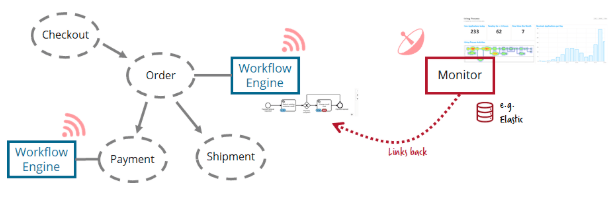
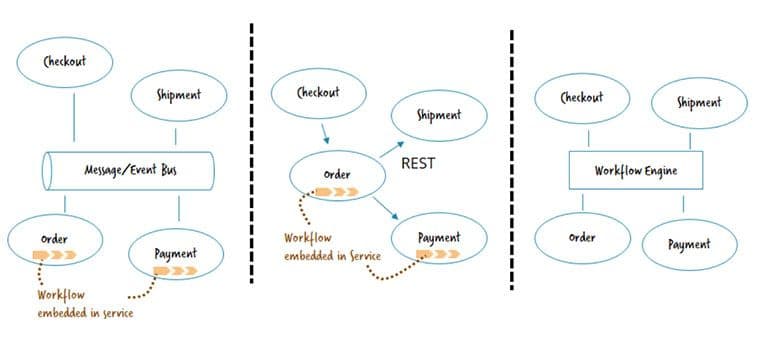
We recently shared 3 Common Pitfalls in Microservice Integration – and how to avoid them and lots of you wanted more. So this four-part blog series takes us one step back to the things you’ll be considering before migrating to a microservices architecture and applying workflow automation. In this third post in the series, we’ll dive deeper into architecture and discuss whether it’s better to run a workflow engine centralized or decentralized.
Mar 2, 2020
Orchestrating Lambdas using Camunda Cloud
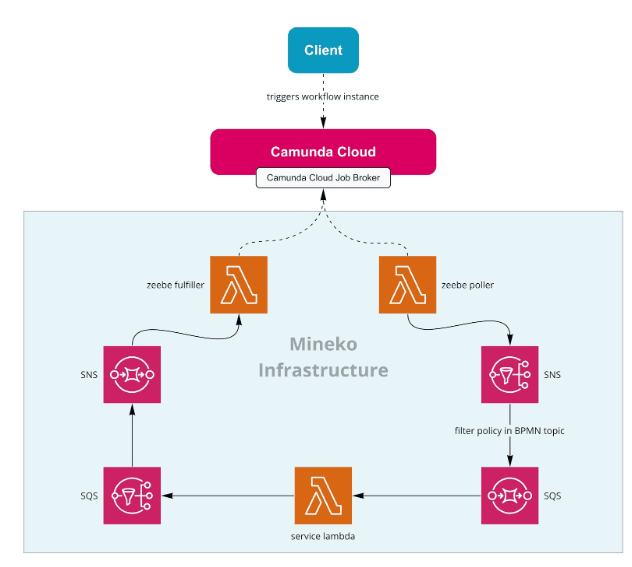
At MINEKO we automate the process for reviewing and validating private and commercial utility bills for tenants. We found that 81% of all utility bills issued in Germany are flawed. So we built a team of legal and automation experts to provide our customers with high quality legal checks on utility bills at a fraction of the costs of a lawyer. We recently started using Camunda Cloud as part of Camunda’s private beta program. Our intention was to evaluate it for the traditional use case of running business processes, not knowing that it would completely change our thinking of design patterns regarding orchestration of microservices. This post describes our technical architecture in more depth, alongside the reasons we built it…
By Felix Jordan
Feb 28, 2020
Camunda BPM 7.13.0-alpha2 Released
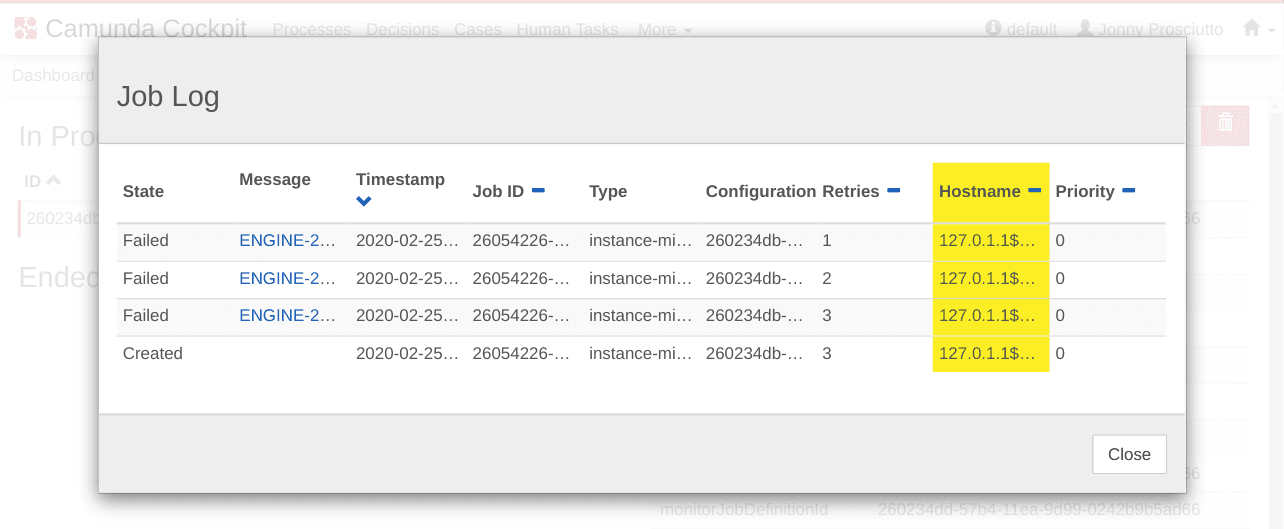
We are happy to share the second alpha release of Camunda BPM 7.13 with you! This release features the following improvements: Job Execution with Managed Server Resources Query Jobs and Incidents by Failed Activity Ids Hostnames in Historic Job Log Full Coverage of DMN FEEL 1.2 OpenAPI Documentation of REST API Camunda BPM Run 8 Bug Fixes You can Download Camunda for free (click on Preview Release) or Run it with Docker. For a complete list of all improvements take a look at the release notes. Please also see the list of known issues. If you want to dig in deeper, you can find the source code on GitHub.
Feb 28, 2020
Camunda Optimize 3.0.0-alpha2 Released
We’re excited to announce the release of Camunda Optimize 3.0.0-alpha2. In this second alpha release of the year, you can get an early look at many improvements and features in advance of the stable Optimize 3.0.0. This release focuses on: Enhanced User Task Monitoring and Reporting Improved Dashboard Handling Support for Elasticsearch 7.6 The complete release notes are available in Jira.
Feb 27, 2020
The Microservices Workflow Automation Cheat Sheet: The Role of the Workflow Engine
We recently shared 3 Common Pitfalls in Microservice Integration – and how to avoid them and lots of you wanted more. So let’s take one step back to the things you’ll be considering before migrating to a microservices architecture and applying workflow automation. In this second of our four-blog series, we’ll look at all things architecture – starting with three basic architecture alternatives to set up your microservices landscape.
Feb 26, 2020
Camunda Modeler 3.7 Released
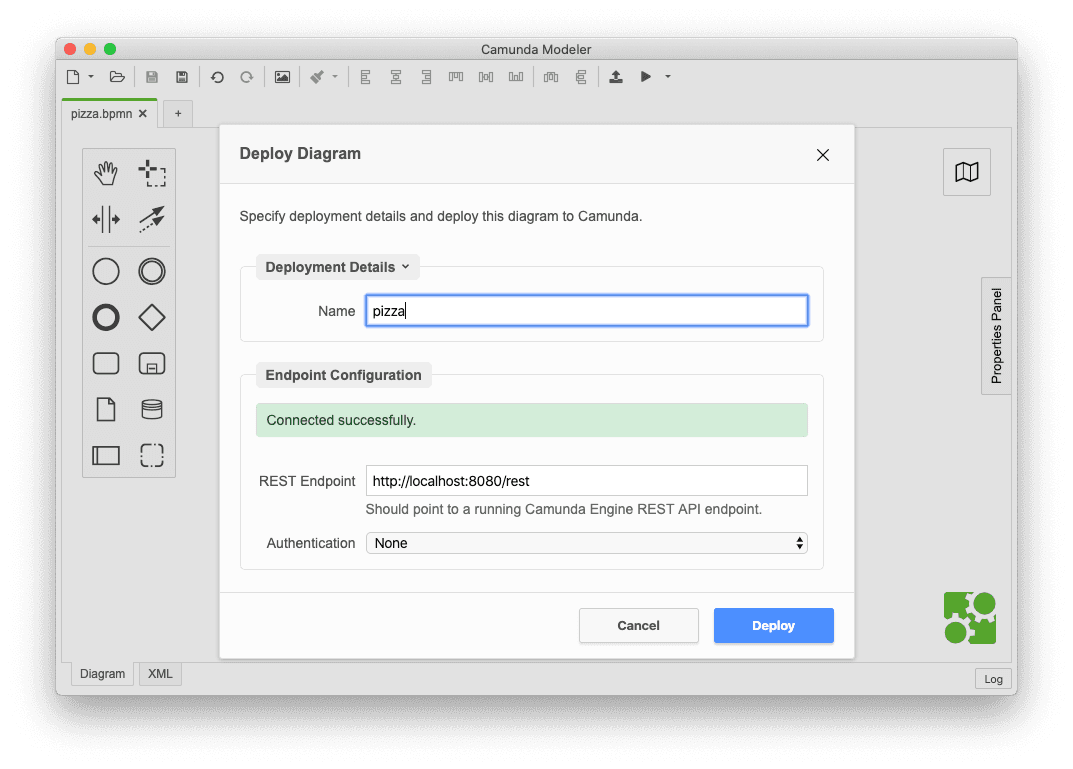
We are happy to announce the Camunda Modeler 3.7 release. It ships several features enhancing modeling experience with the improved space tool among them. Snapping and alignment/distribution helpers that landed in the DMN Editor makes it easier to create clear DMN diagrams. What is more, once you finish modeling, you can quickly deploy your diagram to Camunda Spring Boot Starter. Download the latest release and start modeling right away.
Feb 25, 2020
Camunda’s Chief Technologist Bernd Ruecker to Discuss Pitfalls of Event-Driven Architectures at O’Reilly and QCon
Our Chief Technologist and Co-Founder Bernd Ruecker is speaking at two leading tech conferences in the next few weeks: O’Reilly Software Architecture at New York City on February 26 and QCon London March 3.
By DevRel Team
Feb 24, 2020
Getting Started with Knative
When building applications for Kubernetes, Zeebe can help you orchestrate several microservices. But how do you build those microservices in the first place? How do you connect them in a resilient way? Do you want to leverage the power of Functions as a Service in Kubernetes? The Knative Project was created to provide answers to these exact questions. While I was looking into how Knative will work with Zeebe, I realized it would be really helpful if I created some simple examples to demonstrate how Knative can help you in your projects. It will also help me explain how Zeebe and Knative will integrate and how they can be an amazing combination to build distributed systems. For these reasons, I…