Author

Bernd Ruecker

The Microservices Workflow Automation Cheat Sheet: The Role of the Workflow Engine

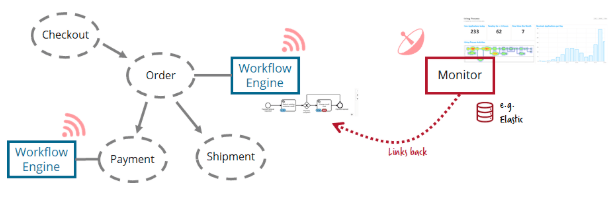
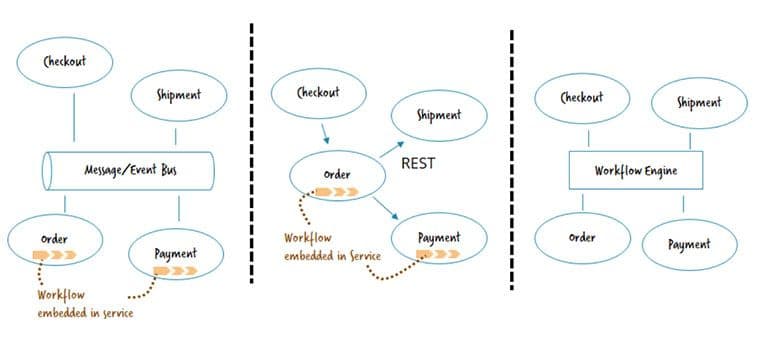
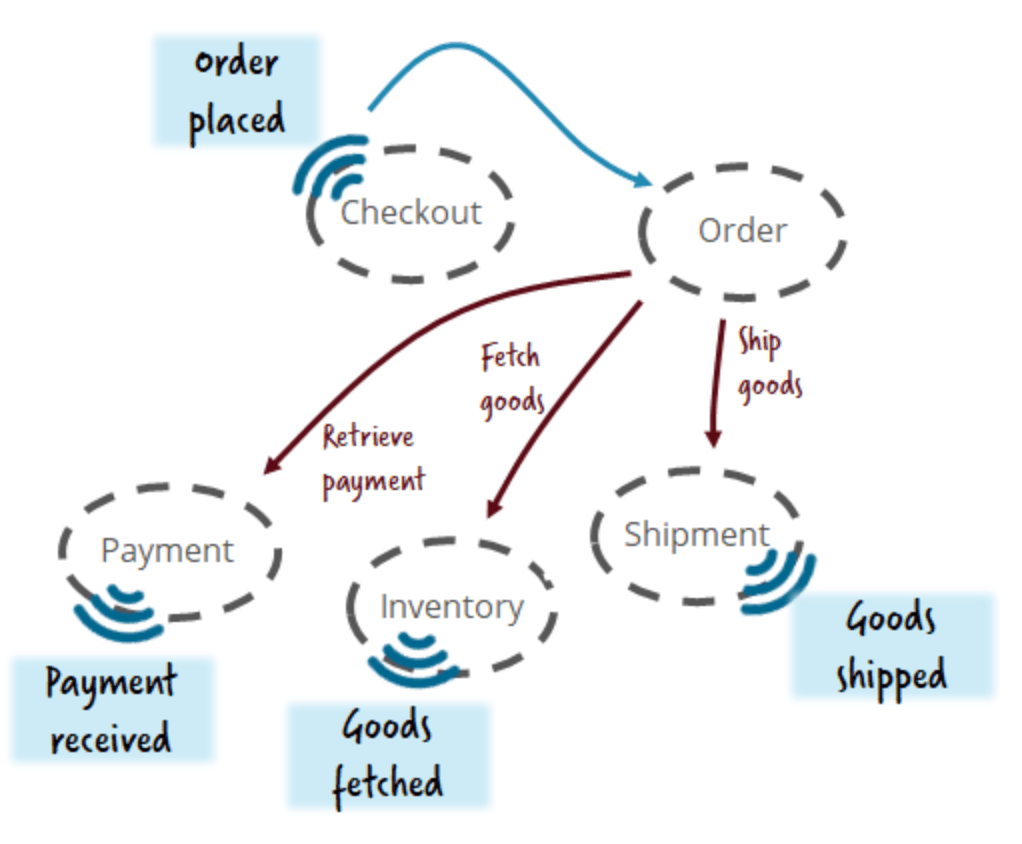
We recently shared 3 Common Pitfalls in Microservice Integration – and how to avoid them and lots of you wanted more. So let’s take one step back to the things you’ll be considering before migrating to a microservices architecture and applying workflow automation. In this second of our four-blog series, we’ll look at all things architecture – starting with three basic architecture alternatives to set up your microservices landscape.

By Bernd Ruecker

Using the Zeebe Kafka Connector to Orchestrate, Integrate, and More

The Zeebe team just implemented a Kafka Connect Zeebe connector. This is a feature users have been asking for since the start of the project, so let’s give it a closer look. What is Kafka Connect? Kafka Connect is the ecosystem of connectors into or out of Kafka. There are lots of existing connectors, e.g. for databases, key-value stores or file systems. So for example you can read data from a RDMS and push it to Elasticsearch or flat files.

By Bernd Ruecker

May 3, 2019

Class Not Found? There’s a simple solution

Generali Switzerland deployed Camunda BPM to production in less than six months, with no prior BPMN knowledge. You’ll find some more details about it in this case study. But integrating and deploying a new tool into your own technical environment is never entirely smooth sailing. In this blog post, we share how Generali’s engineering team was able to troubleshoot issues around running multiple workflow engines in their microservices architecture. You might also want to watch Generali’s presentation at CamundaCon 2018.

By Bernd Ruecker

Apr 17, 2019

How to run Camunda on Pivotal Cloud Foundry (PCF)

Camunda is a popular open source workflow engine that’s very lightweight and developer friendly. If you’re developing in Java you can use it embedded e.g. in Spring Boot applications. Otherwise you simply leverage its REST APIs and language clients, so Camunda can also be used in other programming languages. It can be integrated with basically every technology, including e.g. Kafka, RabbitMQ, REST or SOAP.

By Bernd Ruecker

The Microservices Workflow Automation Cheat Sheet

Editor’s Note: This post originally appeared on Bernd Rücker’s blog and was cross-posted here with Bernd’s permission. Thanks Bernd! Your company might want to go for a microservice architecture and apply workflow automation (I do not go into the motivation why in this blog post, but you might want to read about 5 Workflow Automation Use Cases You Might Not Have Considered or BizDevOps — the true value proposition of workflow engines.) This sets you in company with a lot of our customers. Typically, you will have questions around: Scope and boundaries (“what workflow do you want to automate and how is this mapped to multiple microservices or bounded contexts in your landscape”). To limit the scope of this post I spare…

By Bernd Ruecker

Remote workers and idempotency

In Camunda there is a concept called External Tasks. See External Tasks allows new Use Cases with Camunda BPM or External Tasks in the docs. The basic idea is simple: Camunda does not actively call a service (which would be PUSH), but worker fetch work items queued for them (PULL). Whenever a worker finishes his work item, he reports completion back to Camunda.  Workers can use the Java API, but most often leverage the REST API, as this allows to run workers as own process. This again allows to scale the workers independently and use whatever language you like to implement them. Also it allows on-premise workers in your private network access a cloud hosted engine.Whenever you are talking REST…

By Bernd Ruecker

How to migrate from Activiti 5.21 to Camunda BPM 7.5

With the Activiti Core Developers having left Alfresco (the company behind Activiti), the future of the Activiti project is quite questionable. More and more Activiti users want to migrate to Camunda. There are actually very good reasons to do so, see Camunda Engine Evolution since Activiti Fork. Camunda is a fork of Activiti. We actually developed big parts of the engine ourselves before we decided to part ways with Alfresco back in 2013. Hence it is relatively easy to migrate. This post lists the necessary steps to achieve this:

By Bernd Ruecker

Try All Features of Camunda