Category

Process Orchestration

All Camunda blog posts tagged with Process Orchestration.

Using FEEL for Expressions – Part 1

Zeebe supports FEEL v1.11 – the “Friendly Enough Expression Language” – to express dynamic behavior in your processes. You can use FEEL expressions in a number of places in your BPMN models. From the Zeebe documentation: The following attributes of BPMN elements require an expression: Sequence Flow on an Exclusive Gateway: condition Message Catch Event / Receive Task: correlation key Multi-Instance Activity: input collection, output element Input/Output Variable Mappings: source Additionally, the following attributes of BPMN elements can define an expression optionally instead of a static value: Timer Catch Event: timer definition Message Catch Event / Receive Task: message name Service Task: job type, job retries Call Activity: process id Gateway The most obvious place that you use an expression…

By Josh Wulf

The Pulse of Process Automation

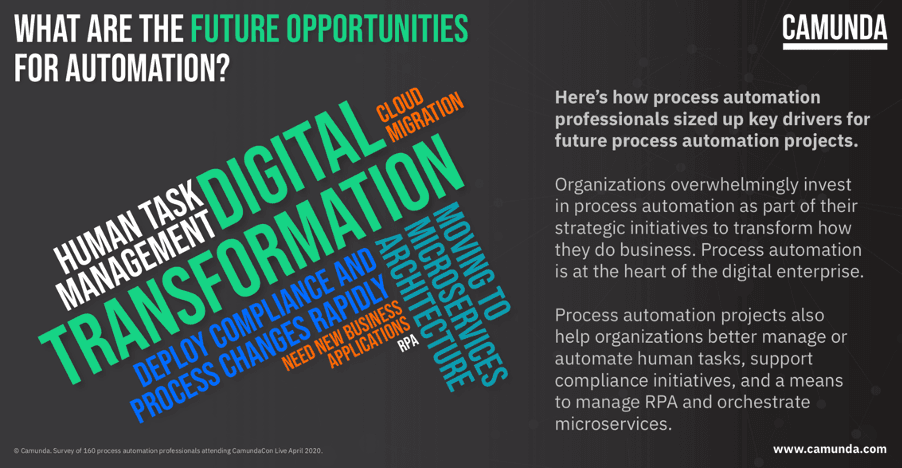
This year has redefined ‘business as usual’ and we wanted to gauge how process automation was playing in a role in 2020 and beyond. So when our global community gathered for CamundaCon LIVE 2020.1 in April, we ran a global pulse survey with 160 attendees — from Germany and the USA, to South Africa and Ecuador — and we asked everything, from how COVID-19 had impacted business, to where they saw the future of process automation.  Here’s what we discovered: Are you interested in learning more about the future of process automation? Join us for CamundaCon LIVE 2020.2 this October 8-9th, to hear first-hand from leading enterprises, from Deutsche Telekom to the University of Pennsylvania, on how they are using…

By Gottfried Sehringer

Short-term Gain, Long-term Pain: RPA’s Rising Popularity

RPA is a hot topic. And why would it not be? The promise of instant automation, time savings and error reduction, not to mention significant cost savings. Global companies like Deutsche Telekom have introduced and automated 2,500 individual bots, resulting in savings of more than 100 million Euros. Meanwhile NatWest Group has achieved “eight figure savings” from using RPA in the last few years. So why then, are these and other industry leaders peppering their success stories with caution? In fact, Paul Jones, Business Automation Services at NatWest classifies RPA as technical debt. Let’s take a closer look at RPA, what it delivers and why you should approach with caution. What do we mean when we talk about RPA? The…

By Rick Weinberg

Orchestrating Cloud Events with Zeebe

Disclaimer: This blog post is about Cloud-Native software, containers, Cloud Events, and Workflows. It describes a concrete example that you can run yourself using Kubernetes, Helm, and Zeebe. You should be familiar with Kubernetes and Helm to follow along and will learn about Zeebe and CloudEvents on your way. While working with Kubernetes the chances are quite high that you’ll find services written in different languages and using different technologies stacks. CloudEvents (CloudEvents / CloudEvents Specifications) was born to enable these systems to exchange information by describing their events in a standard way, no matter which transports these services are using (HTTP, Messaging AMPQ/JMS, Protobuf, etc).  In such scenarios, where you have events being produced and consumed by different systems, there are common requirements that start to arise when…

By Mauricio Salatino

How CMMN never lived up to its potential.

Even before the Object Management Group (OMG) had released the CMMN Specification in 2014, Camunda had already started building a CMMN engine. In the years that followed, we invested in symbol support, modeling capabilities, and admin tools.  But after a couple of years, we decided that we would not be adding any more CMMN features to Camunda and that it will simply be maintained but not fully supported. This post is about the experience Camunda and its Community had with the CMMN standard and how this led to the choices we made to first embrace and then distance ourselves from CMMN.  The Promise of CMMN Case Management Model and Notation (CMMN) was introduced as a direct result of the massive…

By Niall Deehan

Announcing Zeebe 0.23.5 and 0.24.2

New patch releases for Zeebe are available now: 0.23.5 and 0.24.2 and contain various bug fixes as well as minor enhancements. You can grab the releases via the usual channels: Docker Hub GitHub Maven Central Zeebe 0.24.2 is fully compatible with 0.23.4 and 0.24.1, as is 0.23.5 with 0.23.4. This means it is possible to perform a rolling upgrade for your existing clusters. For Camunda Cloud users, Zeebe 0.24.2 is already the latest production version, meaning your existing clusters should have been migrated by the time you see this post. Without further ado, here is a list of the notable changes. Zeebe 0.23.5 All bug fixes in 0.23.5 are part of 0.24.2 as well, except one, which was already part…

By Camunda Cloud Team

From Project to Program: Establishing a Center of Excellence

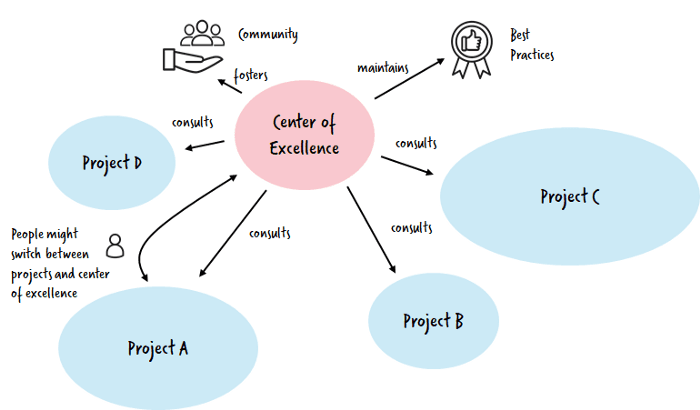
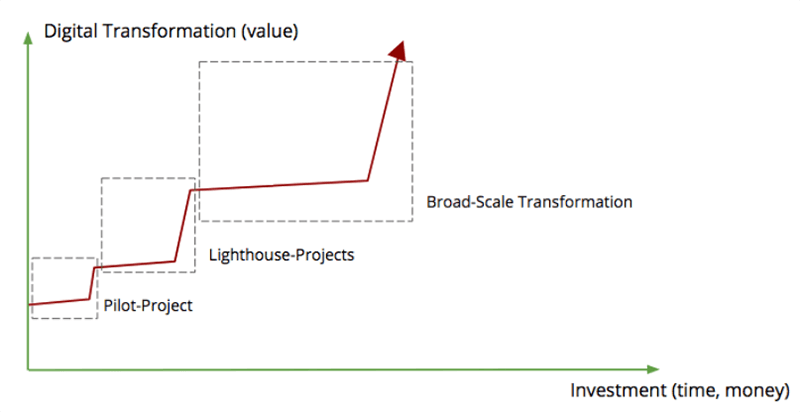
How can you move beyond your first Camunda project and automate hundreds of processes successfully using an agile step-by-step approach? For the last 10 years we’ve been helping businesses to automate workflow processes, migrating from monolithic systems into agile, scalable ways of working. And we’ve discovered that you don’t have to start with a big bang approach – in fact, starting small is the fastest and most effective route to digital transformation. You can catch up on the previous blogs in the series, if you’d like more background before diving straight into this blog, where we’ll look at how to establish and run a Center of Excellence, manage architectural decisions and manage perceptions around your projects. Establish a Center of…

By Bernd Ruecker

From Project to Program: Managing, Monitoring and Leveraging the Cloud

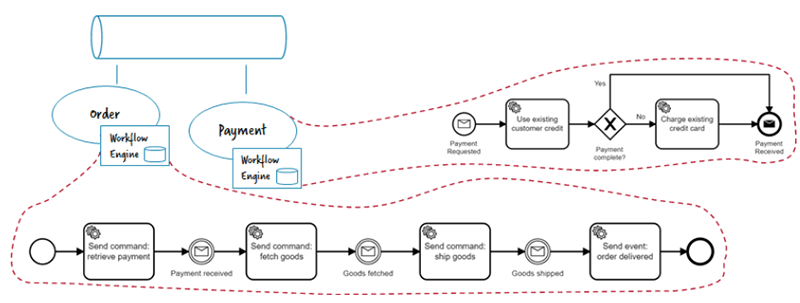
How can you move beyond your first project and automate hundreds of processes successfully using an agile step-by-step approach? For the last 10 years we’ve been helping businesses to automate workflow processes, migrating from monolithic systems into agile, scalable ways of working. And we’ve discovered that you don’t have to start with a big bang approach – in fact, starting small is the fastest and most effective route to digital transformation. You can catch up on the previous blogs in the series, if you’d like more background before diving straight into this blog, on managing decentralized workflow engines. Managing Decentralized Workflow Engines Instead of central platforms I advocate for an approach that every team runs its own engine, especially in a…

By Bernd Ruecker

Try All Features of Camunda