Camunda Blog



May 29, 2020
Anyone can run Camunda BPM on Azure in 10 Minutes
This article shows the simplest and fastest way to get a Camunda BPM server running on Microsoft Azure without command line usage. Keeping things as simple as possible, we perform all steps in the browser. No technical knowledge of Azure or Camunda and no local tool installation are required.
May 29, 2020
Camunda Optimize 3.1.0-alpha2 Released
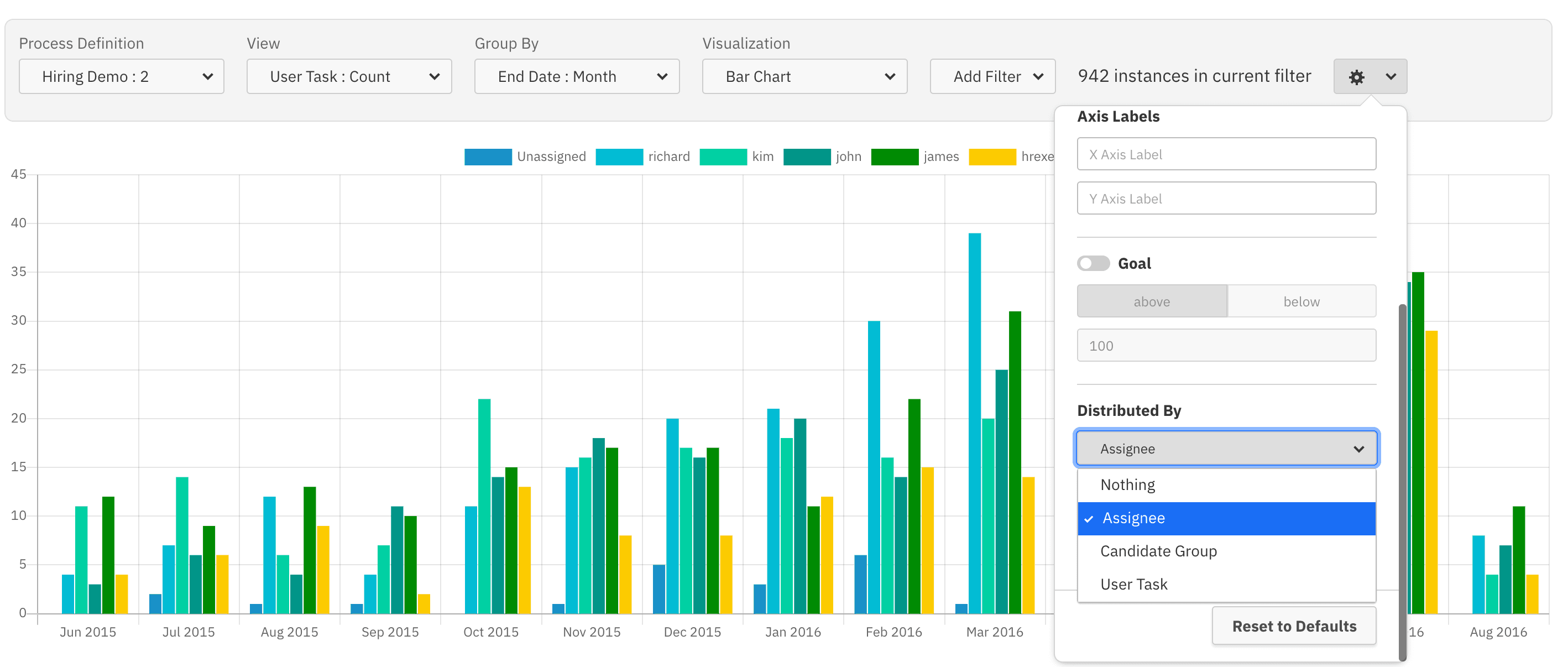
We’re excited to announce the release of Camunda Optimize 3.1.0-alpha2. In this second alpha release of Optimize 3.1.0, you can get an early look at many improvements and features in advance of the stable Optimize 3.1.0.
May 26, 2020
Remote Classroom Trainings for June and July
We’re gearing up for an online summer of training at Camunda! After CamundaCon Live, we conducted our open classroom trainings remotely for the very first time and they were a great success. We had more than 50 participants from all over the world join our sessions held in American, European and Asian time-zones and we received fantastic feedback. A big thank you to all attendees, it was an absolute pleasure. While on-site classroom trainings are not yet possible, your great feedback means we’ll be keeping our new online format for the summer. Today I’m pleased to announce another set of remotely conducted open classroom trainings in June and July in American, European and Asian time-zones: Camunda BPM for Java Developers…

May 25, 2020
Project Layouts, Journeys and Value Propositions: Monitoring & Orchestrating Your Microservices Landscape using Workflow Automation
Back in March, I conducted the webinar: “Monitoring & Orchestrating Your Microservices Landscape using Workflow Automation”. Not only was I overwhelmed by the number of attendees, but we also got a huge list of interesting questions before and, especially, during the webinar. I was able to answer some of these, but ran out of time to answer them all. So I want to answer all open questions in this series of seven blog posts – you can click on the hyperlinks below to navigate to the other entries.
May 23, 2020
Announcing Zeebe Node Client 0.23
The 0.23.2 version of the Zeebe Node Client is out and available via NPM. There was a critical build error in 0.23.0 and 0.23.1. Special thanks to @myfjdthink for reporting it, and @lwille for the Pull Request that fixed it. The complete Change Log is at the end of this post, with the full list of known issues (for the first time in a release – there is one), breaking changes, new features and fixes. In this post, we’ll also feature a few of the major changes in this release in detail. Feature: Zeebe Node is now pure JavaScript Known Issue: Connection Error debouncing Fix: Transparent Reconnection after K8s pod reschedule Feature: Developer-friendly logging Feature: Batch Worker Version 0.23.0 Changelog…
By Josh Wulf
May 22, 2020
Camunda BPM: User Task Assignment based on a DMN Decision Table
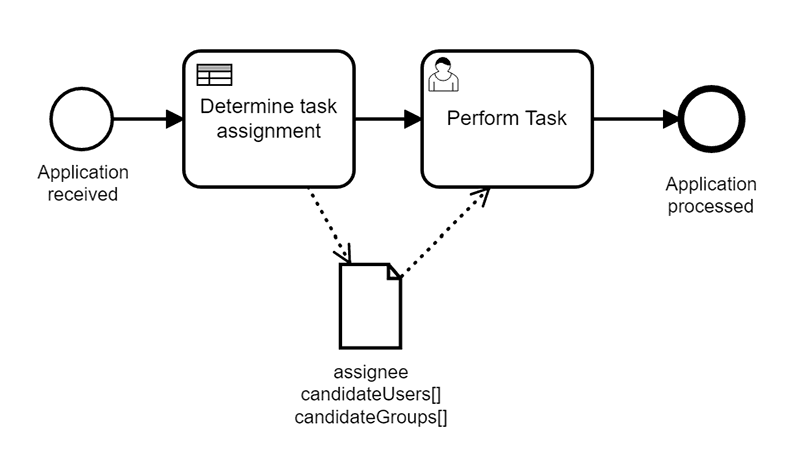
In business processes involving human workflow the task assignment logic can become quite elaborate. For instance the processing of insurance claims, or other variants of approval processes, may require many or complex task assignment rules. The Decision Model and Notation (DMN) decision tables are an excellent tool to manage such rules — outside of code, in a business user-friendly way.
May 20, 2020
Is the Future of RPA Promising or Perilous?
I recently participated in a CamundaCon Live panel, led and moderated by Jason Bloomberg at Intellyx, about how enterprises are currently using RPA. My fellow panelists (Vittorio Dal Bianco at Nokia, Marco Einacker at Deutsche Telekom and Paul Jones at NatWest) provided a fascinating look on the benefits and limitations of this much-discussed technology. During the panel, I gave an analogy to illustrate the issues I’ve seen with RPA implementations:. I have suffered from back problems in the past. When I experienced back pain, that pain then caused my muscles to stiffen, which caused more pain. To help with this, I could take pain medicine, like ibuprofen. However, in order to really get rid of the back pain, I also…
By Jakob Freund
May 18, 2020
Cawemo Enterprise (SaaS) Release: Process Linking for Call Activities
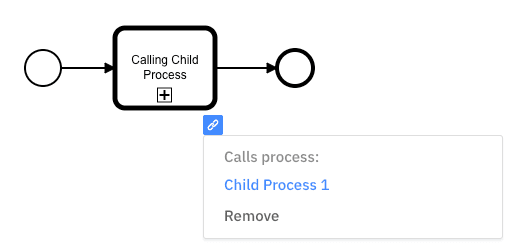
With the latest release of Cawemo.com, we have added a new Enterprise feature: linking of a Call Activity to another process diagram now considers the implementation property calledElement.
May 18, 2020
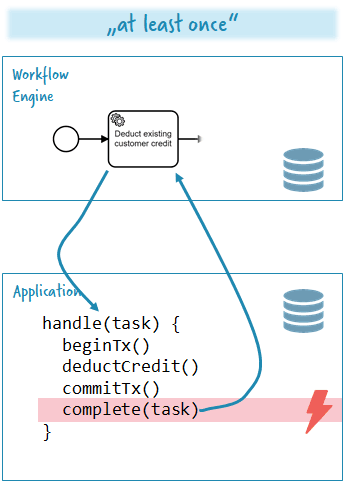
Camunda Best Practices: Monitoring & Orchestrating Your Microservices Landscape
Back in March, I conducted the webinar: “Monitoring & Orchestrating Your Microservices Landscape using Workflow Automation”. Not only was I overwhelmed by the number of attendees, but we also got a huge list of interesting questions before and, especially, during the webinar. I was able to answer some of these, but ran out of time to answer them all.