


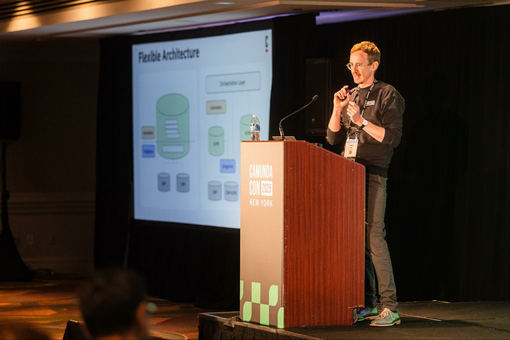
You might be wondering why it’s essential to orchestrate ServiceNow at all. During my presentation at CamundaCon NY 2025, I discussed the concept of transforming enterprise systems with agentic orchestration.
The short answer is that enterprise systems and orchestration tools serve fundamentally different purposes.
Enterprise systems focus on the “what” of business processes. They aim to create a digital representation of the enterprise, striving to mirror it as accurately as possible. For instance, business objects can be likened to a stack of incoming orders, while dashboards represent the shelves in a warehouse.
In contrast, orchestrators concentrate on the “how.” They manage the execution of processes, detailing the steps necessary to complete tasks. For example, the “how” of account opening might include creating a master record, linking that account to the general ledger, and configuring payment methods.
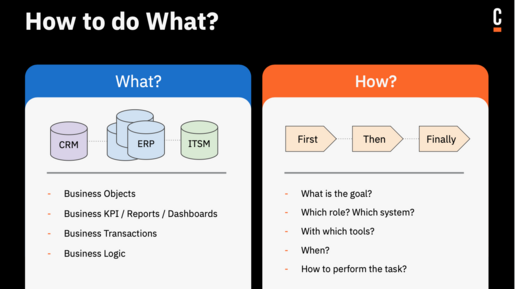
It’s crucial for everyone involved in the enterprise to understand these “how” processes, as challenges often arise between people, systems, and devices, particularly during automation.

Although ServiceNow developers may argue that ServiceNow Flows or ServiceNow Playbook can assist with the “how,” these tools have notable shortcomings. One significant limitation is in facilitating collaboration between business and IT.
Effective orchestration requires a shared understanding of the “what,” which can be achieved through Business Process Modeling Notation (BPMN). This approach allows both business and IT stakeholders to define processes in a common language, enabling direct execution of models, measurement of goal achievement, and rapid deployment of improved processes.

Another important aspect is observability, which is essential for gaining insights into operations within cloud environments.
The Application Manager plays a critical role in overseeing the IT infrastructure and providing assistance when issues arise, such as when a large number of claims are stalled. The Operator analyzes these problems, which may involve service partners or host systems, resolves the issues, and restarts any failed process instances. Meanwhile, the Process Owner is responsible for measuring and optimizing processes against defined key performance indicators (KPIs). This role includes adjusting work assignments during peak business periods, modifying process designs, and introducing automation where necessary.

While integration tools are widely available in enterprise technology stacks, they primarily facilitate the synchronization of data between systems and support local automation. However, they often fall short when it comes to orchestrating a large number of systems along the customer journey. A typical Fortune 500 enterprise may operate hundreds to thousands of enterprise systems and applications. While integration tools can assist in data exchange, they do not enhance the user experience, as customers frequently need to interact with multiple systems to complete their tasks.
Another significant advantage of Camunda is its developer-friendliness. Camunda is built on a composable architecture that supports open standards, providing developers with the flexibility they need to create effective solutions.
How to build a ServiceNow orchestration
One of the primary goals of our Camunda Enterprise integrations is to meet users where they currently are in their workflows. To illustrate this, we have created a video that demonstrates a Camunda end-to-end orchestration where AI agents assist participants in completing their tasks.

To simplify the process of building orchestration with ServiceNow, we have designed integration patterns for the most common interactions.
The Camunda process is readily available in the Camunda Marketplace.
Summary

Camunda offers seamless integrations with leading enterprise systems such as SAP, ServiceNow, and Salesforce. These integrations are user-friendly, free of charge, and certified by the respective enterprise system vendors. Camunda is committed to maintaining these integrations in the future, ensuring ongoing support for all your orchestration needs. There never was a better time to get started!
Start the discussion at forum.camunda.io