


Each year, Camunda hosts its annual kickoff—a time for connection, celebration, and looking ahead to what’s next. This year’s event was held in January in Madrid, Spain, providing a beautiful backdrop for our innovative spirit and our highly anticipated 2026 Hackathon!
Since we launched the first Hackathon in 2012, it has become a cornerstone of our innovation process, a chance for our teams to step away from their daily routines and explore new ideas. These events are a great way for us to gather and prototype solutions to real user problems in a focused, cross-functional environment.
This year’s Hackathon saw a record turnout, with over 130 Camundi participating from both the engineering and infosec teams. Their efforts resulted in a staggering 38 projects! Teams explored new integrations, automation workflows, UI enhancements, and quality-of-life improvements. The scope of these projects truly showcased the diverse talent within Camunda. It’s always inspiring to see how quickly our teams can conceptualize, build, and iterate; it proves that focused time and collaboration lead to remarkable breakthroughs.
As is typical for hackathons, time constraints required teams to focus on quick proof-of-concept solutions rather than full-fledged production use cases. However, some of these ideas may find their way into the Camunda product in the future.
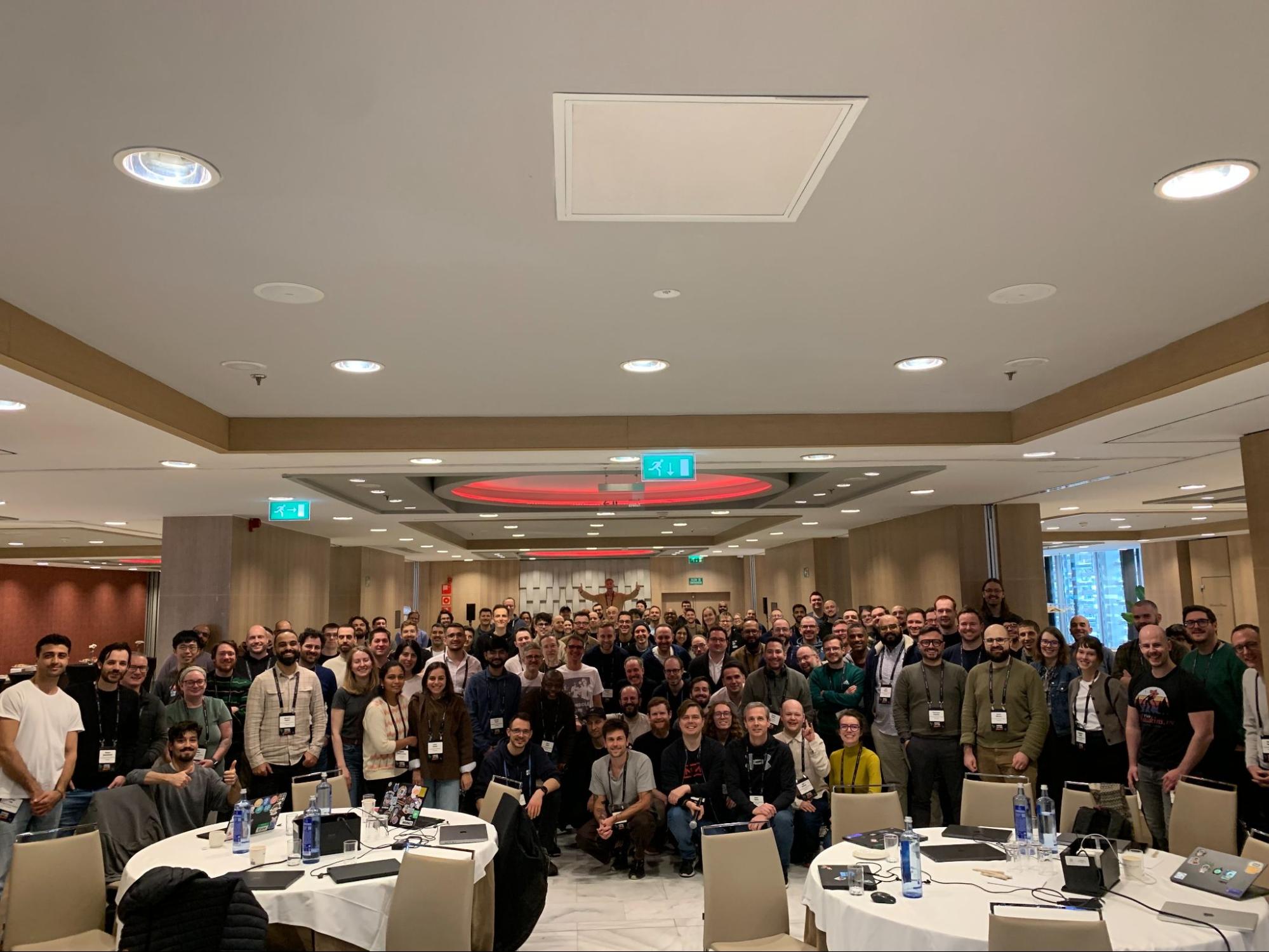
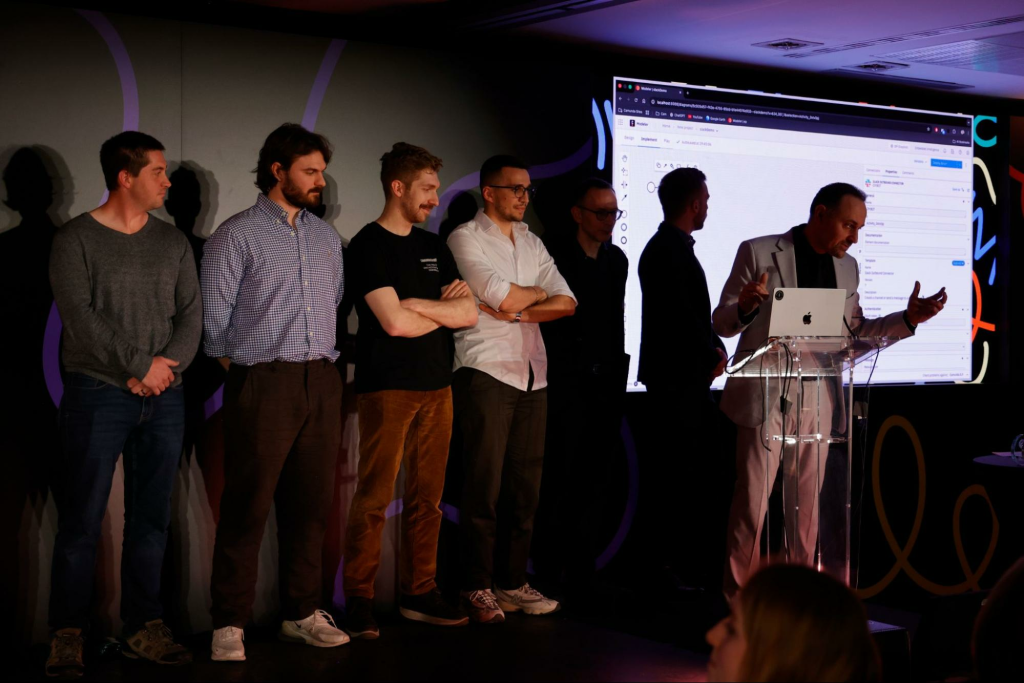
This year’s Hackathon was capped off with an engaging judging session where participants presented their projects to showcase their work and compete for votes. After a round of public voting, three teams emerged victorious.
Winning projects
First place was awarded to project C9, recognized for its innovative approach to reducing friction for Camunda users. C9 enabled them to quickly build workflows that connect across the existing systems in their organization without needing to know any system configuration details.
Second place went to 🍹2.0 for their work on c8ctl CLI, and the third place was claimed by the Cluster Management UI project.
🥉 Third place project: Cluster Management UI

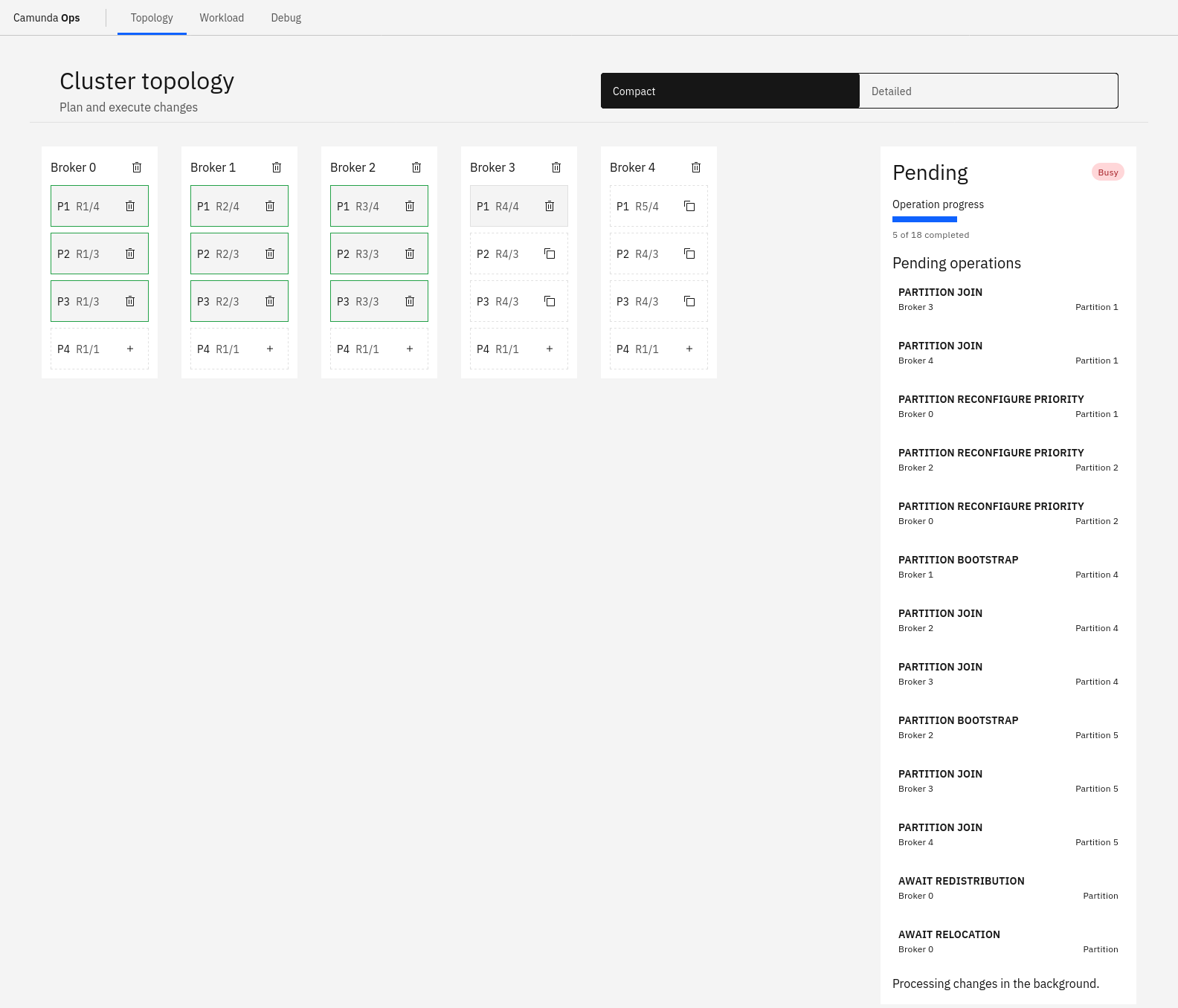
CamundaOps, the working title for this project, features a new cluster management UI focused on broker and partition scaling. It visually exposes functionality provided by the management API.
In addition to showing the current cluster topology with more details, such as current health status, it also allows users to add and remove brokers, add partitions, and change the partition distribution. Changes are planned first, then approved, allowing the user to review a list of changes before deploying them. The UI updates in real time, showing the rollout progress.
🥈 Second place project: 🍹 2.0

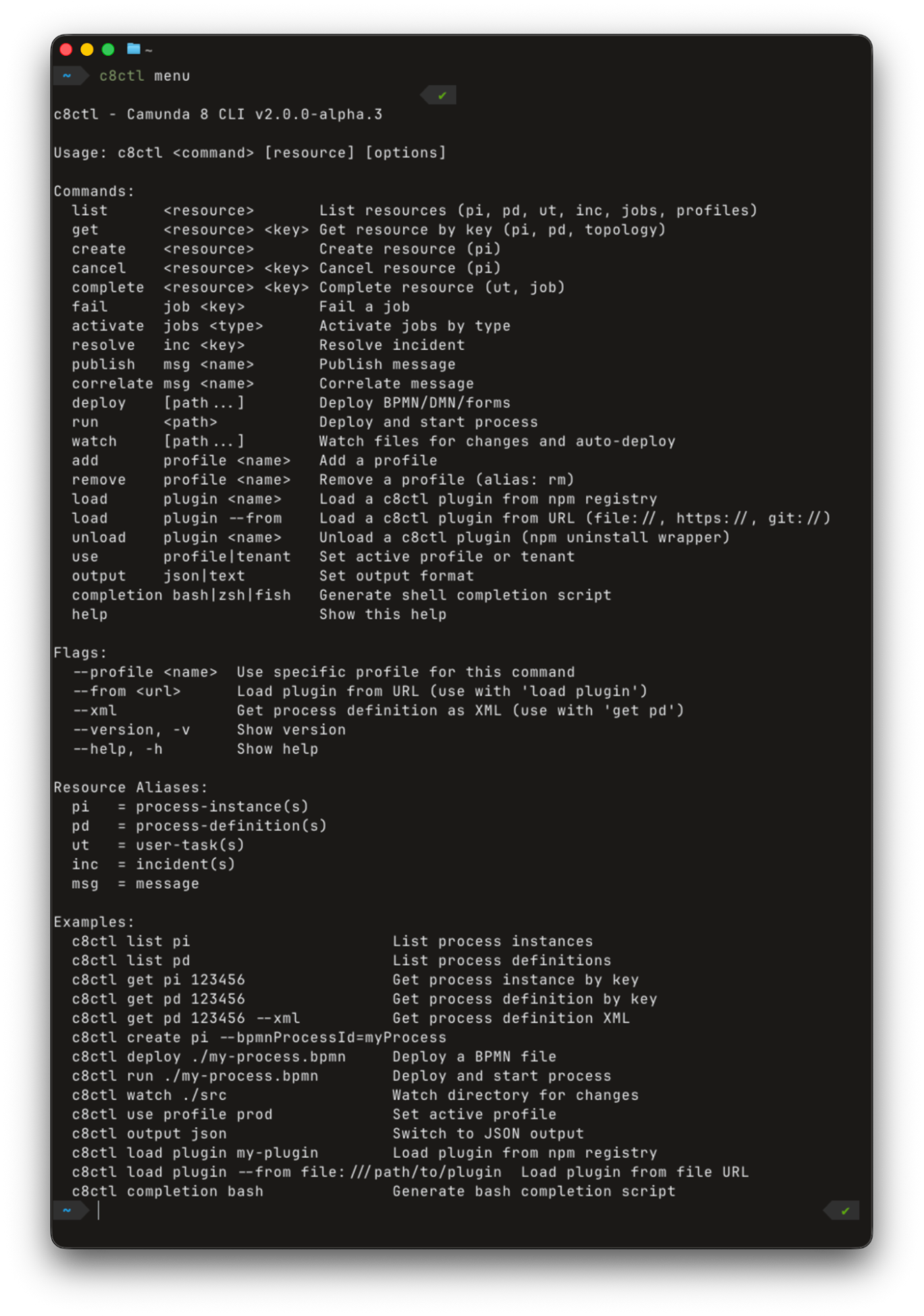
🍹2.0 (c8ctl) is the new minimal‑dependency Camunda 8 CLI that replaces zbctl with a modern Node.js experience. c8ctl unifies everyday cluster operations (deploy, inspect, manage) plus profiles, multi‑tenant handling, and shared Camunda Modeler connections into one scriptable tool.
On top of the core commands, it adds watch mode, building block–aware deployments, and a plugin system. Teams can auto‑redeploy assets on change, standardize deployment structure, and extend the CLI with domain-specific commands as the platform and their use cases grow.
Available right now via npmjs. Install with npm i -g @camunda8/cli@alpha.
🥇 First place project: C9
C9 ramps up time-to-value and reduces friction for Camunda users by enabling them to quickly build workflows that connect across existing systems in their organization—without needing to know system configuration details.
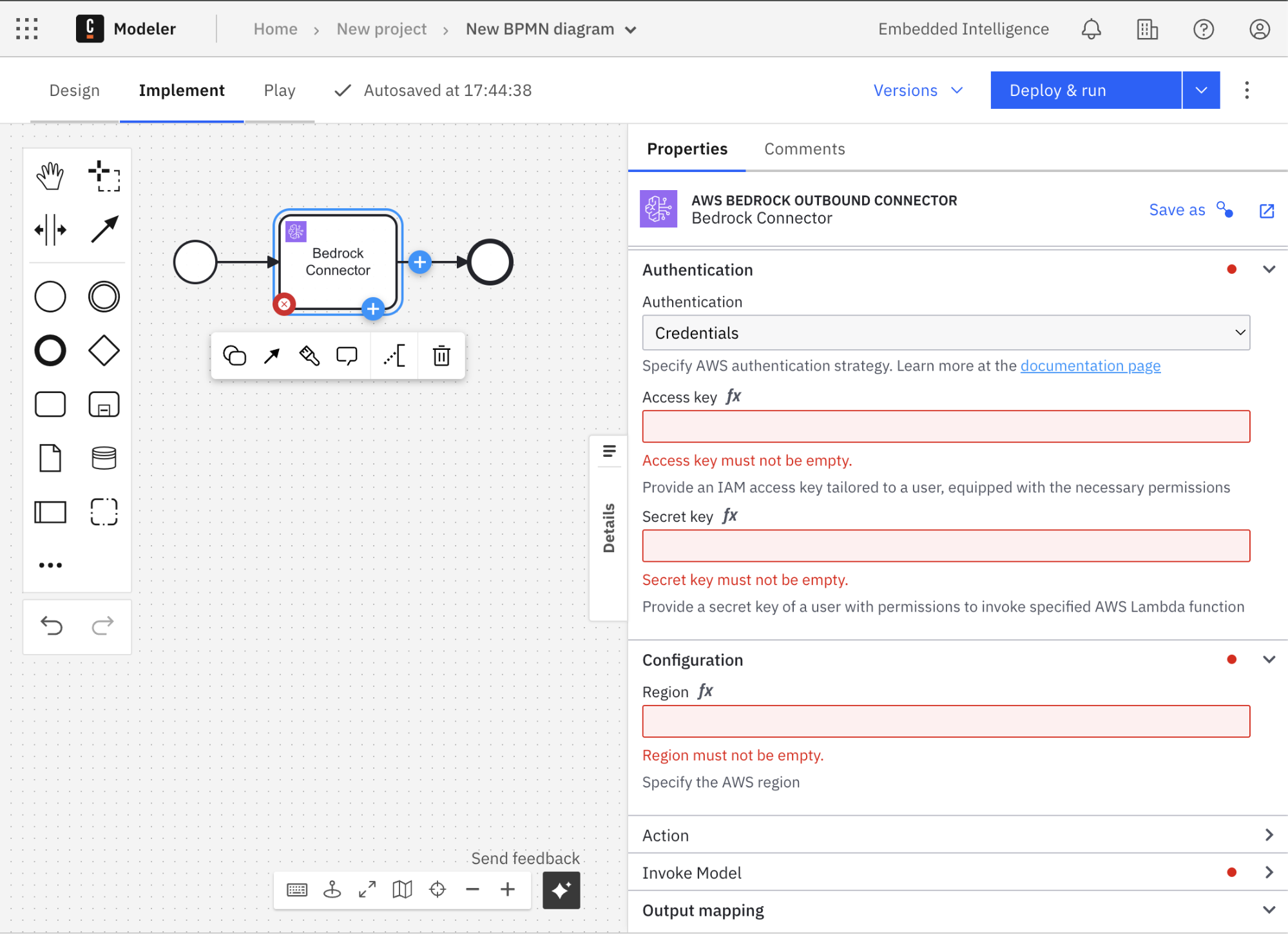
Before C9, every time a user dropped a connector onto the canvas, they would be met with red X’s and red boxes in a property panel that asks for mysterious things like tokens and tenant IDs.
This project reimagines the experience in the context of a future Camunda Hub. It introduces a concept of preconfigured, centrally managed connections. Users can easily select a connector and remain focused on building their automation rather than hunting down connector configuration parameters.

Other projects
Here are the highlights of some other projects that were done in the scope of the Hackathon:
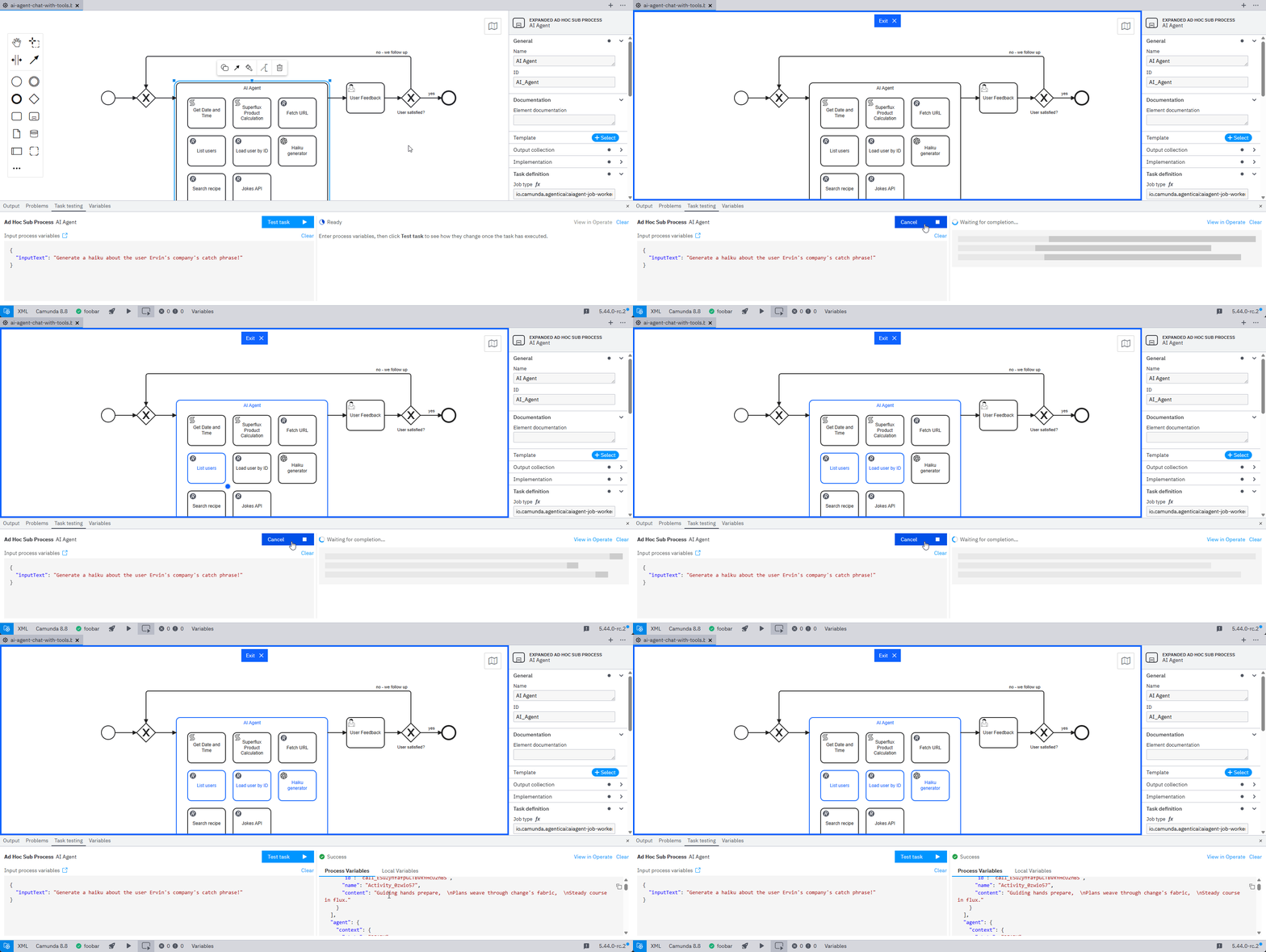
- Test anything, not just anywhere, but in the Modeler: This project enables task testing for sub-processes (including agentic ad-hoc sub-processes) so they can be tested in the Modeler. It also adds a visualization on the canvas.
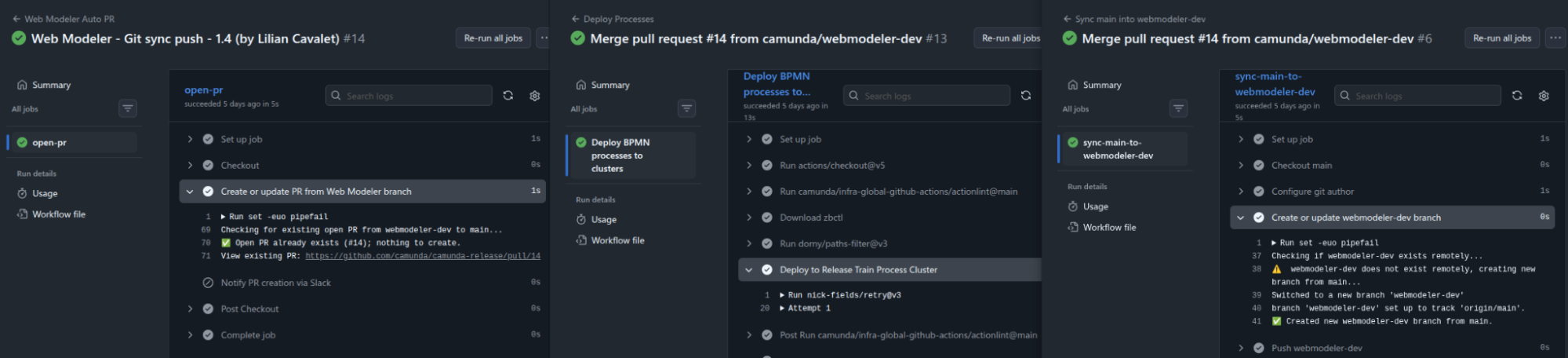
- C8 Release Train + GitHub CI/CD Integration: This project integrated Web Modeler Git Sync with our GitHub CI/CD. Models designed in Web Modeler become pull requests and automated deployments, letting users keep Git as the source of truth while using Camunda to orchestrate Camunda’s own release process.
- Distributed tracing: What happens when a user makes a request to Camunda’s Orchestration Cluster API? Distributed tracing aims to make it visible, allowing more insights and making Camunda less of a black box.
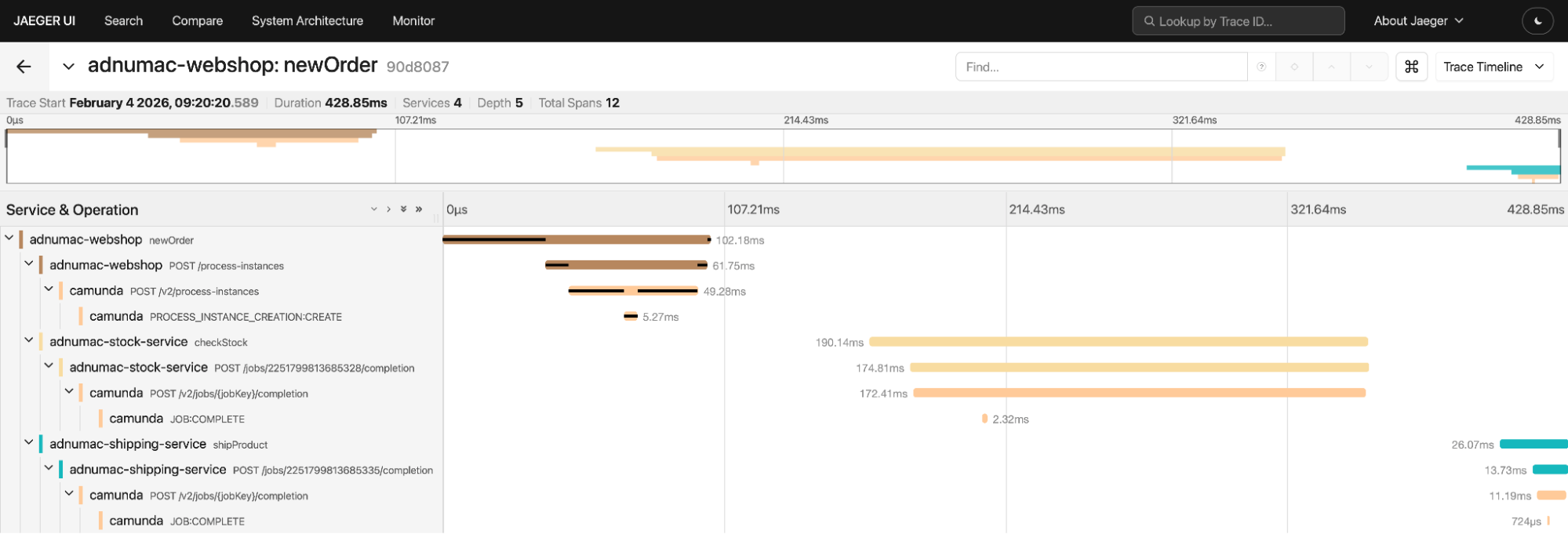
- MCP Server for Camunda Helm Values: The Camunda Helm Chart is the recommended option for self-managed deployments, but the number of available Helm values makes configuration complex. To address this and leverage LLM capabilities, we implemented an MCP server that provides structured access to Helm values.

- Browser-based single sign-on (SSO) when deploying from Desktop Modeler: This project simplified the deployment experience when using the Desktop Modeler with an OpenID Connect (OIDC) setup. Users can connect to the cluster by signing in through their browser. The only parameter needed in the Desktop Modeler is the cluster URL.

How these projects impact Camunda’s future
Many projects don’t just remain as interesting experiments—they often find their way into our core product, directly benefiting our users. Past Hackathons have already contributed valuable features and improvements to the Camunda Platform, demonstrating the clear impact of engaging in this kind of creative exploration. Our product management team will review all the projects presented and determine which will make it into the Camunda 8 roadmap.
The results speak for themselves: 2026 Hackathon was a great success, and we’re already looking forward to seeing what next year brings!
If you’re inspired by our commitment to innovation and want to help shape the future of agentic process automation, we encourage you to check out our careers page. We’re always looking for talented individuals to join our team.
Start the discussion at forum.camunda.io