
Camunda Robotic Process Automation (RPA)
Seamless Automation, Streamlined Orchestration: Power Your Workflow with RPA
Transform isolated task automation into comprehensive end-to-end process orchestration by embedding RPA directly into your workflow.
Achieve full visibility and control over the entire process, while minimizing the need for disparate tools. Camunda’s composable architecture seamlessly integrates existing RPA bots and new bots developed with our RPA services, all within the same platform. Streamline complexity, cut costs, and enhance operational efficiency with a more unified, intelligent approach to automation.

What is RPA?
Robotic Process Automation (RPA) technology uses “virtual” robots to automate manual, repetitive tasks. This is often used with legacy systems that do not have an API for integration purposes.
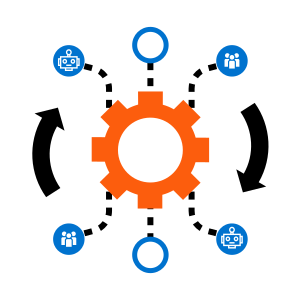
Eliminate fragmented and isolated tasks by integrating RPA into your end-to-end processes
Shift your focus from isolated task automation to comprehensive end-to-end process orchestration with Camunda RPA. By consolidating your isolated tasks, you can improve operations while optimizing human and bot interaction with Camunda RPA enabling streamlined, scalable, and more cohesive processes.
For a complete end-to-end automation journey, connecting to legacy systems is often essential and is a crucial bridge between older systems and modern processes. RPA acts as the glue, connecting the old with the new.
Improve overall operations by removing pockets of isolated bots incorporating them into E2E orchestration with integrations and creating bots with Camunda RPA.
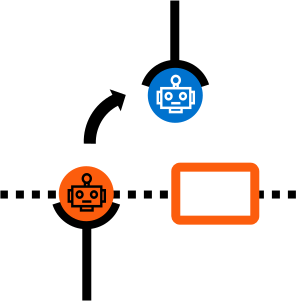
Adapt to changing requirements and maintain flexibility to adopt new technologies
With Camunda RPA, you can change and adapt over time as needed. Build the RPA bots you need now and replace them with API calls or new technologies without modifying your processes.
Camunda focuses on creating micro RPA bots that simulate APIs, allowing you to automate interactions with legacy systems seamlessly. These bots serve as the glue between the legacy world and new digital environments.
Position your organization to adapt quickly to new and changing requirements with Camunda RPA. Build the bots you need now using integrated open-source tools and then update or replace them while maintaining your original overall process.
Build new automated RPA bots to reduce vendor lock-in and increase overall flexibility
Camunda RPA offers integrated open-source tools to create RPA scripts to guide RPA bots through a set of actions.
With Camunda RPA, you can consolidate RPA bots without costly vendor lock-in thanks to Camunda’s composable architecture that allows you to choose between best-of-breed, fully integrated, or a blended approach – and most importantly change and adapt over time as needed.
Our built-in, lightweight RPA solution is designed for simplicity, allowing users to quickly automate interactions with legacy systems without extensive setup or complex integrations covering basic use cases efficiently.
Camunda RPA allows organizations to create RPA bots reducing the need for multiple tools, and lowering operational complexity and costs.
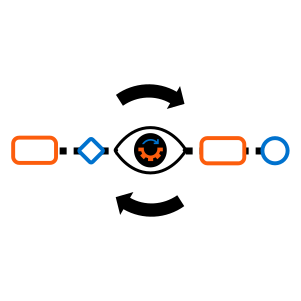
Gain end-to-end visibility and comprehensive monitoring of your RPA-infused processes
Camunda consolidates all insights, giving you a comprehensive view of your automated workflows and simplifying process management.
You can track KPIs, monitor RPA performance, and resolve incidents directly at the process level, with Camunda gaining end-to-end process visibility and monitoring.
With Camunda, you gain full visibility into your end-to-end processes, including all RPA executions, within a single platform.
Seamlessly integrate RPA into your process orchestration
Camunda provides an all-in-one solution where RPA can be seamlessly integrated within the process orchestration platform.
This approach reduces the need for multiple tools by creating RPA bots with our integrated tool lowering operational complexity and costs.
Camunda offers a composable architecture that allows you to blend existing bots, create new ones built on our open-source RPA framework, and leverage multiple RPA services within your process orchestration.
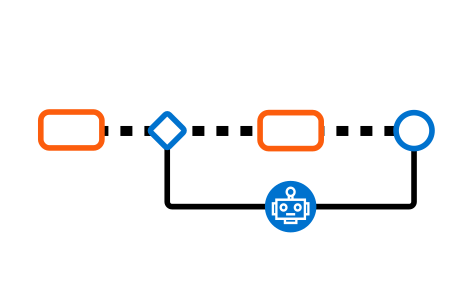
Camunda RPA technology helps organizations reduce their isolated pockets of RPA bots by moving to process orchestration using a composable architecture streamlining E2E processes efficiently and effectively.
Check out RPA + BPMN = True End-to-End Business Process Orchestration and read about how Deutsche Telekom is building a foundation of process orchestration with Camunda.
Frequently asked questions
What is robotic process automation (RPA)?
Robotic process automation uses software “robots” to mimic human clicks and keystrokes so you can automate repetitive, rule-based tasks. It is especially useful when business processes must interact with legacy applications that lack APIs or other modern integration points. RPA excels at reading screens, entering data, and following predictable steps at high speed, which reduces error rates and frees employees to focus on judgment and exception handling.
Why integrate RPA into end-to-end process orchestration?
Most RPA initiatives start as tactical fixes, then fragment into isolated pockets of automation that are hard to manage. Orchestration solves this by integrating bots in a single end-to-end business process, with clear handoffs to humans and services and unified monitoring. In Camunda, you model the full journey, trigger bots when needed, and track outcomes, incidents, and KPIs at the process level. This delivers consistent SLAs, fewer blind spots, and faster troubleshooting, while letting teams replace bots with APIs or other technologies later without redesigning the process. Orchestration turns RPA from local task automation into an enterprise-scale capability that can adapt as systems modernize and requirements change.
What are the benefits of using Camunda for RPA bots and orchestration?
Camunda provides a composable architecture to integrate existing RPA bots, create new ones with built-in lightweight tools, and blend them with APIs and AI agents in the same platform. You gain end-to-end visibility, with consolidated monitoring of bot runs inside the business process, plus KPI tracking and incident resolution at the process layer. Camunda reduces vendor lock-in, lowers operational complexity, and makes it easier to swap a bot for a native integration when available, without changing the overall business process. The result is a simpler stack, lower costs, and a future-ready path from tactical screen automation to durable process automation.
What are the typical use cases for RPA with Camunda?
Use RPA where you need to interact with legacy or proprietary systems that do not offer APIs, or where screen-driven tasks are the fastest way to automate today. Common patterns include data entry between systems, extracting values from on-screen tables, batch updates, lookups in mainframe applications, and bridging temporary gaps during a migration. In a Camunda process, these tasks sit alongside AI agents, API calls, event-driven logic, and human approvals. This makes RPA ideal for order changes, claims intake, customer data corrections, and back-office exception handling, where a few legacy touchpoints would otherwise block end-to-end automation. As you modernize, you can incrementally replace bots with services, while preserving the same orchestrated process and its audit trail.
Can Camunda RPA handle legacy systems without APIs?
Yes. Camunda RPA is designed to “simulate APIs” for systems that do not expose them. You can build lightweight bots with integrated open source tools to navigate legacy screens, read and write fields, and execute deterministic steps, all triggered and governed by the BPMN process model. Because these bots are part of the same orchestration platform, you maintain a single view of execution, metrics, and incidents. When a system later provides an API, you can replace the bot with a service call without changing the overall process. This provides a pragmatic bridge between the old and the new, so modernization can proceed at your pace without sacrificing control, visibility, or compliance.